Main overview · Check a licence · Payment risks · Age and ID checks
UK Casino Marketing Claims and Real Gambling Site Reviews
 Available in US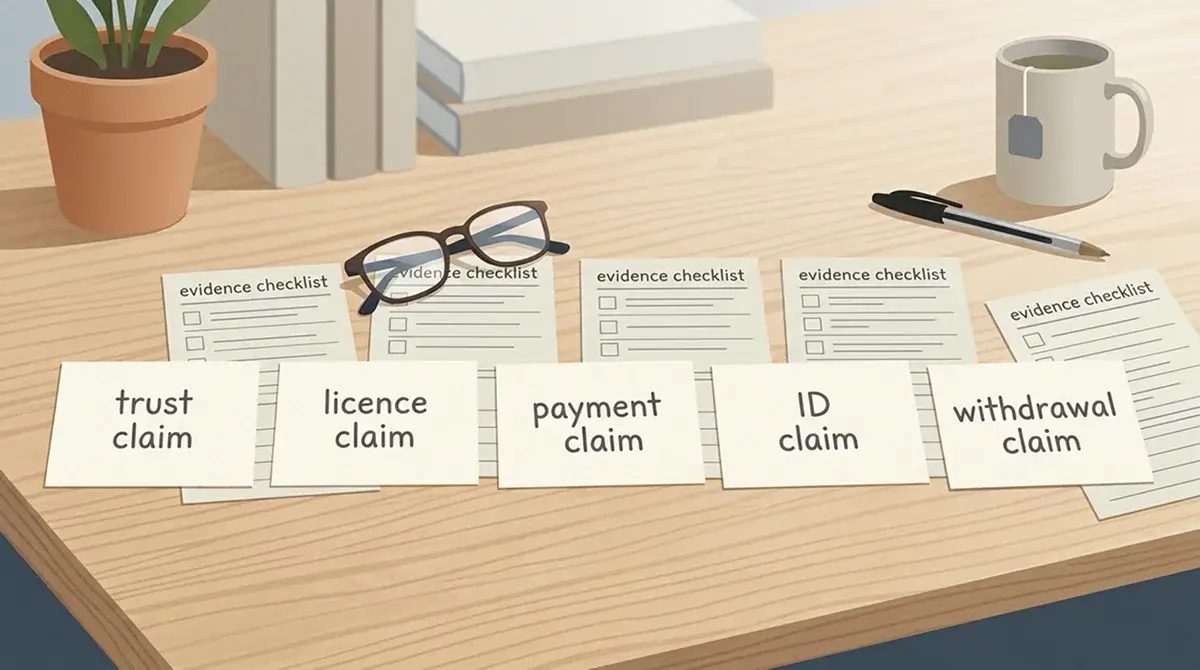
Table of Contents
- Evaluating UK Casino Trust and Bonus Guarantees
- Risk map for common claims
- Claims that should make you pause immediately
- How to check a claim without turning it into a recommendation
- What official guidance supports this cautious approach
- Official pages worth using
- When the claim is really about gambling pressure
- Related pages
Evaluating UK Casino Trust and Bonus Guarantees
A useful gambling claim should answer a specific question. Who is the licensed business? Which domain is covered? What rules apply to age and identity checks? Where are withdrawal rules written? Which complaint route is available? If the claim does not help with those questions, it may be little more than sales language.
The Gambling Commission has described factors that can draw people toward illegal or unlicensed online gambling, including offers, alternative payment routes, lower identity checks and attempts to avoid protections. That does not mean every site using attractive language is identical. It does mean that claims which make protection gaps sound convenient should be treated with care, not repeated as benefits.
A reader should also separate three things: what the website says, what an official or reliable page can confirm, and what remains unknown. The unknown part matters. A missing licence match, unclear withdrawal rule or vague data claim is not a small detail when personal information and money are involved.
Do not be swayed by flashy advertisements without first conducting thorough privacy, cookies and account-security checks to protect your personal data.
Risk map for common claims
| Claim | What it may imply | What would need checking | What not to assume |
|---|---|---|---|
| “Licensed” | The site wants the reader to believe an official body oversees it. | The business name, trading name, domain, status and permitted activities on the Gambling Commission public register, where Great Britain licensing is claimed. | Do not assume a badge, footer line or licence number proves the domain is covered. |
| “Legal for UK players” | The wording suggests the reader has no legal or practical risk to consider. | Which jurisdiction is being discussed, whether the business is licensed for Great Britain, and whether the site is actually allowed to offer the activity. | Do not treat a broad legal phrase as personal legal advice or a safety guarantee. |
| “No ID” or “no verification” | The site presents fewer checks as convenience. | Age and identity rules, the account-opening process, the withdrawal process and the reason any check is absent or delayed. | Do not assume fewer checks mean better privacy or easier withdrawals. |
| “Fast withdrawals” | The site suggests money will be returned quickly. | Withdrawal conditions, verification requirements, fees, limits, bonus restrictions and dispute route. | Do not assume speed until the written terms explain the full path. |
| “More payment options” | The site presents alternative payments as flexibility. | Credit-card rules, e-wallet source-of-funds issues, bank gambling blocks, currency conversion and whether the payment route affects complaint or refund options. | Do not assume an unusual payment route is safer because it is accepted. |
| “Bigger bonuses” | The headline offer is being used to pull attention away from conditions. | Wagering requirements, withdrawal limits, excluded games, time limits and whether the bonus terms are clear before deposit. | Do not assume a large headline amount is valuable without the rules underneath it. |
| “No limits” | The site frames fewer limits as freedom. | Whether the wording points to weaker player protection, missing affordability controls or pressure to gamble beyond a safe amount. | Do not assume fewer limits are harmless, especially if you have used blocks or self-exclusion. |
Claims that should make you pause immediately
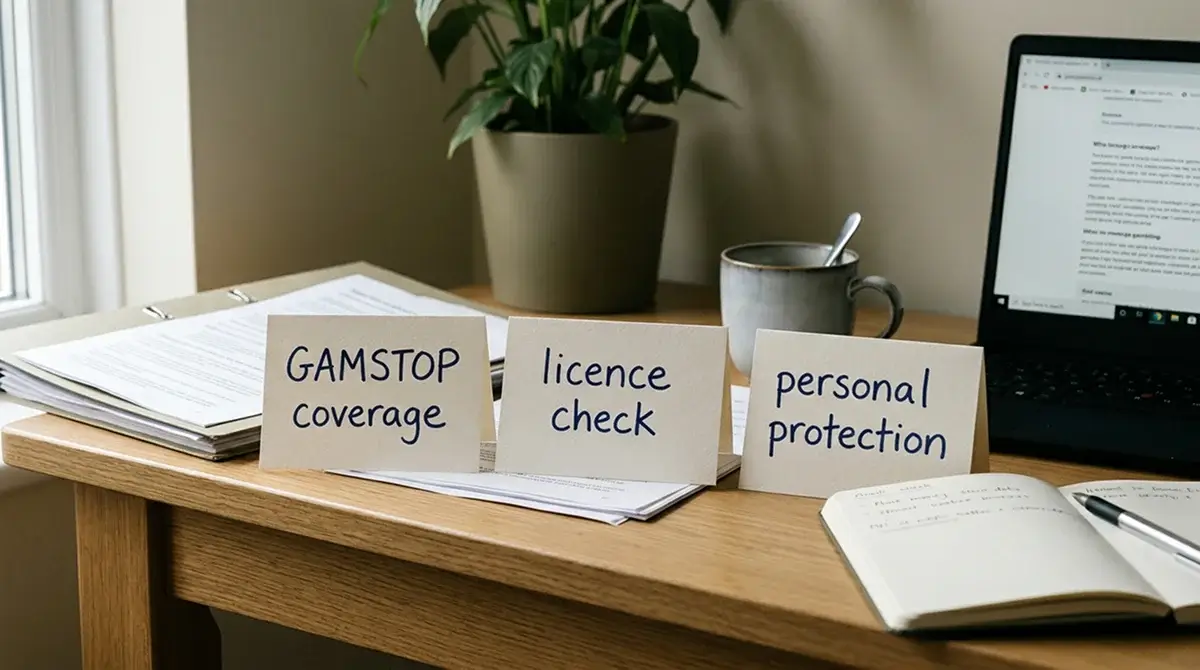
Some wording is more serious than ordinary marketing. Be especially careful with any page that encourages you to avoid GAMSTOP, avoid a bank gambling block, avoid age or identity checks, use another person’s details, hide payment information, ignore spending limits or chase a blocked account through another route. Those are not just convenience claims. They may weaken protections that exist to stop harm or reduce financial risk.
If you are self-excluded, the safest response is not to test the wording. The useful next step is to keep the protection in place and consider support or extra blocking tools. If you are not self-excluded but feel rushed, angry after losses or tempted by a claim that seems too easy, slow the decision down. A gambling website benefits when the reader acts quickly. The reader benefits when the claim is checked slowly.
How to check a claim without turning it into a recommendation
- Start with the licence claim. Use the public register where a Great Britain licence is being implied. Match the domain and business details, not just a name that looks similar.
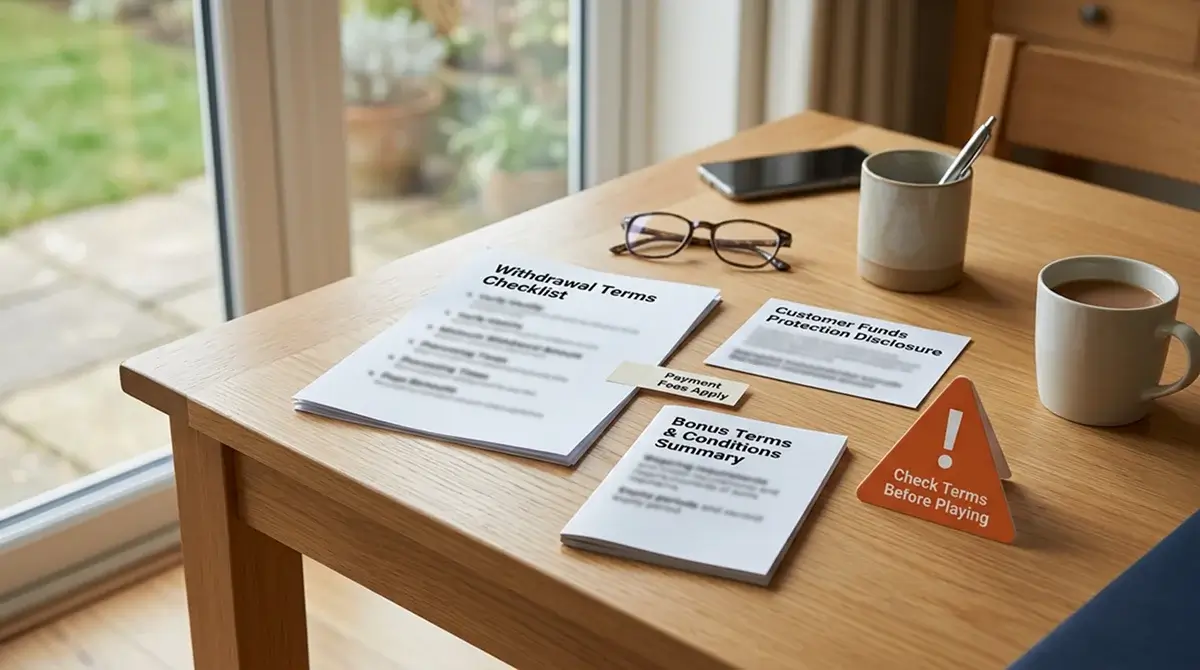
- Read the terms before deposit. Focus on withdrawal rules, account closure, bonus limits, verification, restricted countries, fees and customer-fund information.
- Check the payment route. A payment method can affect protection, delays and practical recovery options. Do not assume unfamiliar payment wording is safer.
- Look for identity-check timing. Licensed online gambling requires age and identity checks before gambling. A promise of no checks should raise questions, not confidence.
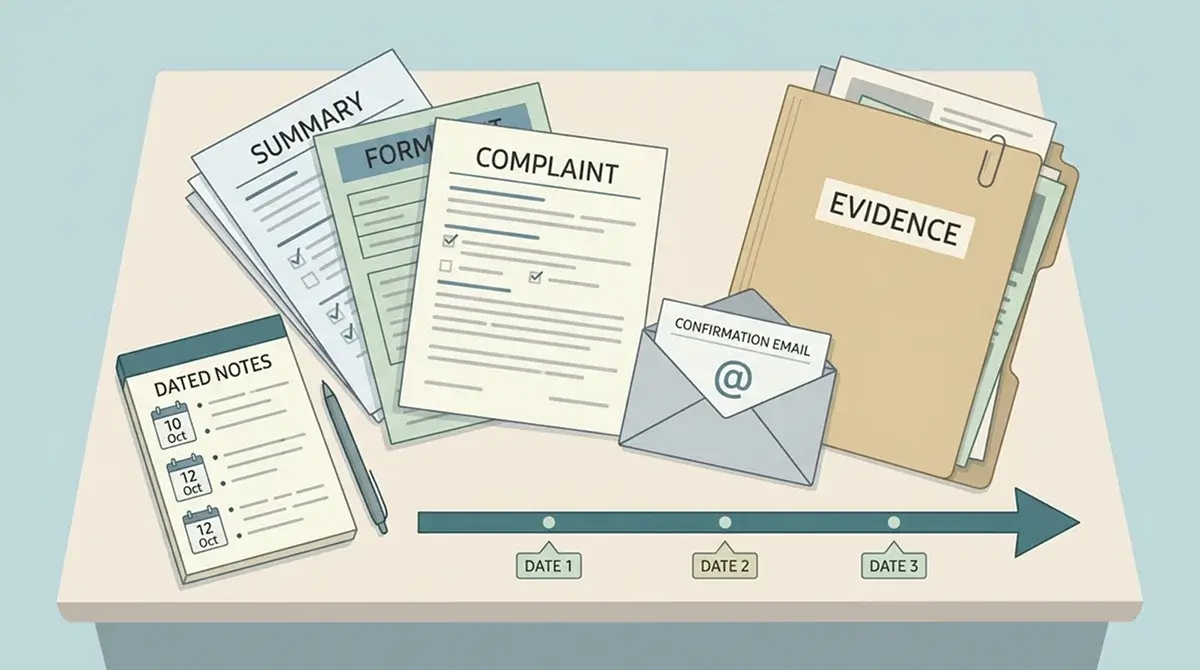
- Keep evidence if there is already a dispute. Save terms, account messages and transaction records. Do not rely on memory or screenshots from unrelated websites.
This process does not turn a site into a good choice. It simply prevents a short claim from doing more work than it deserves. A claim that cannot survive these checks should not receive your money or personal documents.
What official guidance supports this cautious approach
The Gambling Commission tells consumers to check whether a gambling business is licensed and warns that illegal sites can carry risks. Its public guidance on age and identity verification also explains that online gambling businesses must ask for proof of age and identity before gambling. The Commission’s material on credit-card gambling and payment controls supports caution around payment claims, while Gambling Commission and CMA material on fair and transparent terms supports caution around unclear bonuses, withdrawal obstacles and arbitrary verification deadlines.
Those points are enough for a practical rule: do not accept broad claims as facts unless they connect to a named, checkable rule or document. Even then, a single verified point does not prove everything else. A site might have a clear bonus term but a weak complaint route. It might display a licence claim but fail to match a domain. It might offer a familiar payment option while using unclear withdrawal terms.
Official pages worth using
- Gambling Commission public register
- Gambling Commission guide to age and ID verification
- Gambling Commission guide to gambling using a credit card
- Gambling Commission guidance on fair and transparent terms
- Competition and Markets Authority material on online gambling
When the claim is really about gambling pressure
Sometimes the claim that looks commercial is actually emotional. “No limits” may appeal after a previous account has been restricted. “No ID” may appeal when a person is trying to avoid a self-exclusion match. “Alternative payment” may appeal after a bank block has done its job. If that is the reason the claim feels attractive, a technical check is not enough. The safer path is to step away from the site and use a protection or support route.
Protecting your funds and mental health is the core mission of Gamble Free No GamStop.
There is no need to prove that gambling is out of control before taking a protective step. If a claim is pushing you to undo a block, hide activity or spend money you cannot comfortably lose, it is already a warning sign.
Related pages
- How to check a gambling site before you deposit
- Age, ID and verification checks in online gambling
- Payments, bank blocks and credit-card rules
- Withdrawals, terms and customer-fund protection checks
- GAMSTOP, self-exclusion and what to do if you are blocked
Created by the "Casino not on Gamstop" editorial team.