Main overview · GAMSTOP and self-exclusion · Withdrawals and terms · Age and ID checks
UK Gambling Bank Blocks and Casino Payment Methods
 Available in US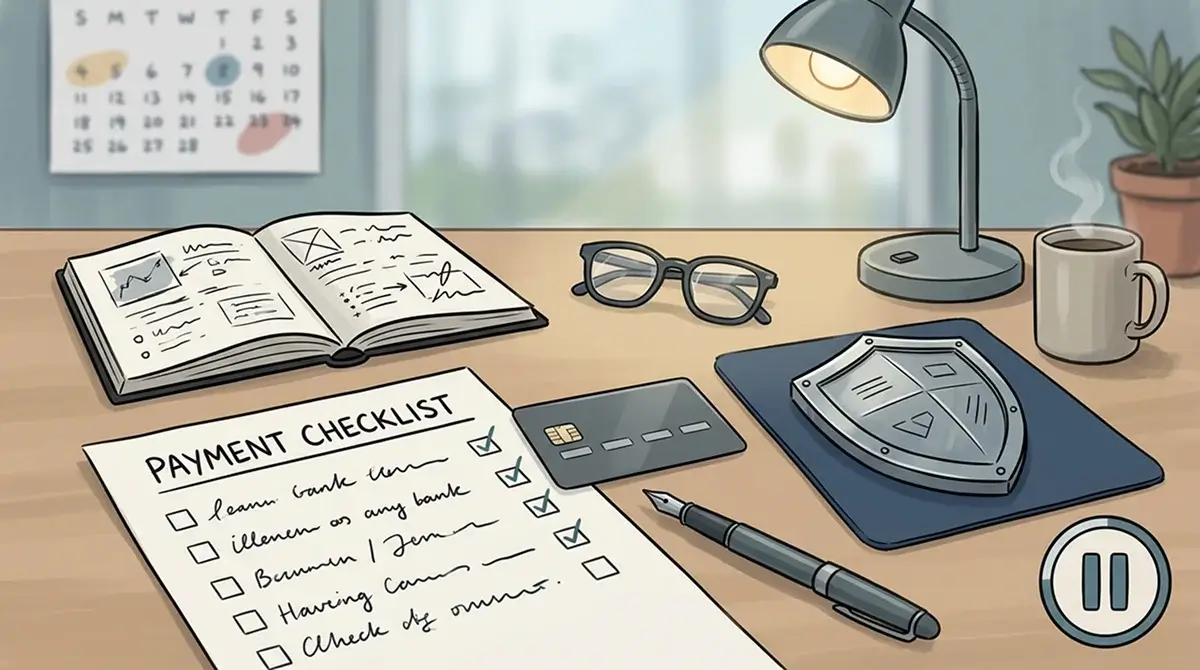
Table of Contents
- Secure Casino Payment Options and Credit Card Limitations
- Bank gambling blocks are protective tools, not obstacles to beat
- Pre-payment checklist
- Alternative payments are not automatically safer
- Deposits and withdrawals should be read together
- What not to do with payment information
- Official and support pages worth using
- If the payment question is really about pressure
- Related pages
Secure Casino Payment Options and Credit Card Limitations
Payment checks should come after licence, terms and identity questions, not before them. A site that pushes deposits before the reader can understand the business name, licence position, withdrawal conditions and complaint route is asking for trust too early. This matters even when the deposit amount is small, because the first payment can lead to document requests, withdrawal delays, bonus disputes or repeated deposits under pressure.
In Great Britain, the Gambling Commission explains that gambling businesses cannot accept credit-card payments for gambling. It also warns that e-wallets and other routes can raise source-of-funds issues if they are funded by credit. The practical point for a reader is not to find a different route around a rule. The point is to understand why the rule exists and to avoid treating payment workarounds as normal convenience.
Beyond initial deposits, you must carefully review the withdrawal rules and customer-fund protection policies to avoid unexpected delays when cashing out.
Bank gambling blocks are protective tools, not obstacles to beat
Many banks offer gambling blocks or similar tools. These blocks can add friction by stopping or delaying gambling transactions, depending on the bank and how the transaction is coded. Support organisations such as GambleAware and GamCare describe them as one layer of protection, not a perfect guarantee. A transaction may be missed if it is not coded as gambling, if a payment route hides the nature of the transaction, or if the block has limits in the bank’s own system.
If a bank block stops a payment, the safer question is not which payment route might still work. The safer question is why the block is there and what other support may help. A block can be especially important when someone is chasing losses, gambling after self-exclusion, borrowing to deposit or trying to gamble during a stressful moment. Looking for a way around the block can turn a useful barrier into a test of willpower.
Pre-payment checklist
| Check | What to look for | Reason to stop |
|---|---|---|
| Licence and domain | The business name, trading name and domain match official information where Great Britain licensing is claimed. | The site shows only a badge, a vague licence line or a name that does not match the domain. |
| Payment route | The deposit route is clearly explained, including whether the provider, currency and account name are understandable. | The site pushes unusual routes, another person’s account, unclear processors or “private” payment instructions. |
| Credit-card boundary | The site does not encourage credit-card gambling or a route designed to hide credit funding. | The wording suggests using another payment layer to get around credit-card restrictions. |
| Bank block and self-exclusion | The payment choice does not weaken a protection you already put in place. | You are choosing the route because a block, limit or self-exclusion stopped the direct route. |
| Withdrawal terms | Withdrawal rules, verification, fees, limits and bonus restrictions are visible before deposit. | Terms are missing, vague, changed after account opening or spread across unclear pages. |
| Dispute route | The site explains complaint steps and any independent dispute route that applies. | There is no clear complaint route, or the route depends only on live chat promises. |
Alternative payments are not automatically safer
Some websites promote alternative payment methods as speed, privacy or flexibility. That language can be misleading if it hides practical risk. A payment route may be harder to trace, harder to dispute, affected by foreign-currency conversion, linked to extra fees, or separated from the consumer protections the reader expected. Without verified terms, it is not possible to assume that any method is safer, faster or easier to recover.
It is also risky to treat payment variety as proof of legitimacy. A site can accept familiar-looking payments while still having unclear terms, weak complaint routes or a licence position that does not match the domain. The payment method is only one part of the picture. It cannot fix an unverified operator, a missing withdrawal policy or a self-exclusion concern.
Deposits and withdrawals should be read together
A deposit page may be simple while a withdrawal path is complicated. Before depositing, read the rules that apply when money leaves the account: verification, pending periods, minimum and maximum withdrawals, bonus restrictions, fees, account reviews and reasons the operator may refuse or delay payment. If those points are not visible before deposit, the reader is being asked to accept uncertainty.
Fair and transparent terms guidance supports the basic expectation that important restrictions should be clear. CMA material on online gambling has also highlighted problems around unclear bonus terms, withdrawal obstacles and arbitrary verification deadlines. A reader should not need to discover important limits only after a win or after sending documents.
What not to do with payment information
- Do not use another person’s payment details to gamble.
- Do not choose a payment method because it appears to avoid a bank gambling block.
- Do not use credit or a hidden credit route to fund gambling.
- Do not deposit because a chat agent says withdrawals are fast unless the written terms match.
- Do not assume crypto, vouchers, e-wallets or foreign processors have the same dispute options as ordinary bank payments.
- Do not keep testing small deposits if the reason is to break through a block, limit or self-exclusion.
These points are not about judging a person for wanting a convenient payment method. They are about avoiding a private financial decision when the checks are incomplete or the protection layer is doing its job.
Official and support pages worth using
- Gambling Commission guide to gambling using a credit card
- Gambling Commission guidance on preventing credit-card use
- GambleAware information on blocking and self-exclusion
- GamCare information on bank gambling blocks
If the payment question is really about pressure
A payment problem can reveal a wider problem. If you are looking for a new route because a bank block, self-exclusion, spending limit or affordability concern stopped you, the practical answer is not another method. It is to keep the barrier in place and use support. That might mean contacting your bank, adding blocking software, speaking to GamCare or using information from GambleAware about self-exclusion and blocking tools.
It is also sensible to pause if you are trying to recover losses. A payment method cannot make chasing losses safer. It can only make the next deposit easier. When the reason for paying is urgency, embarrassment, anger or fear, a delay is useful protection.
Always prioritize platforms that are transparent about their financial rules, as highlighted in our trusted non-GAMSTOP casino safety portal.
Related pages
- GAMSTOP, self-exclusion and what to do if you are blocked
- Withdrawals, terms and customer-fund protection checks
- Age, ID and verification checks in online gambling
- Help options if gambling feels hard to control
Created by the "Casino not on Gamstop" editorial team.