Great Britain-focused gambling safety guide
UK Casinos Not on GamStop and Real Money Gambling Sites
 Available in US
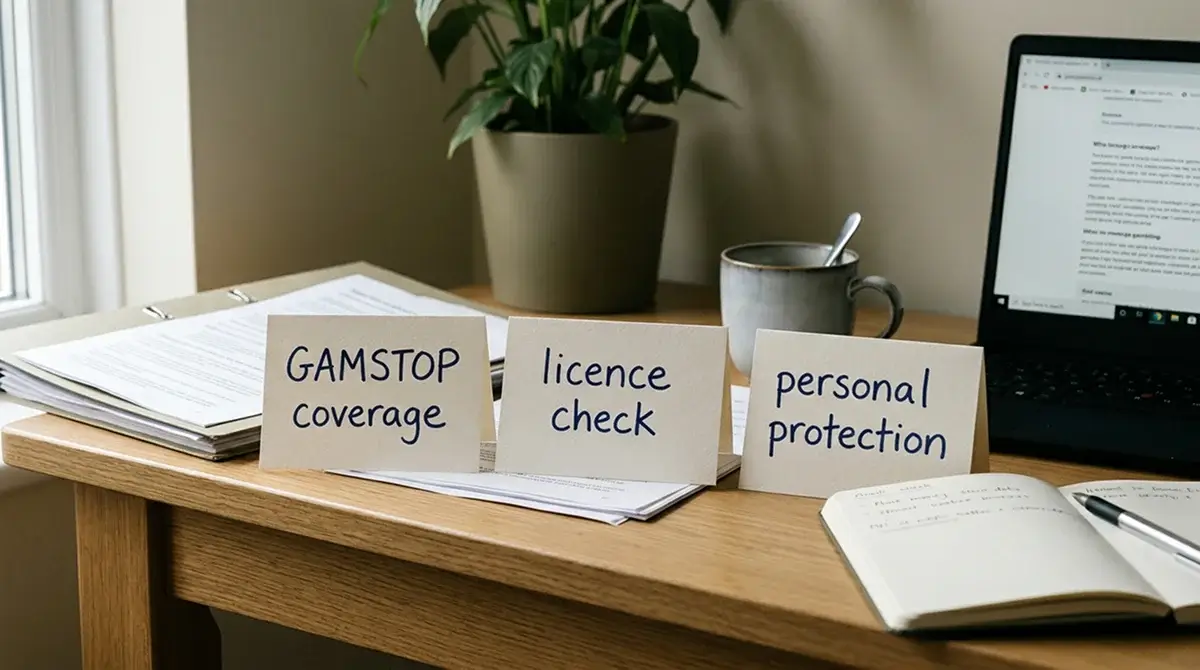
The phrase “casino not on GAMSTOP” can sound like a simple label, but for a UK reader it raises serious questions about licensing, self-exclusion, payments, identity checks and personal protection. This guide explains the topic in plain English without casino lists, brand rankings or shortcuts around protective systems.
For Great Britain readers · Licence checks first · No workaround advice

Table of Contents
- Essential Checks for Non GamStop UK Casinos
- What “not on GAMSTOP” usually means
- How to check a gambling site before depositing
- Before-You-Deposit Safety Check
- Marketing claims that deserve a slower read
- Payments, identity checks, withdrawals and account terms
- Self-exclusion is not a problem to solve with a different site
- Complaints, disputes and evidence
- Privacy, cookies and account security still matter
- Use the right guide for the right problem
- Questions people often need answered
- Final check before you act
Essential Checks for Non GamStop UK Casinos
- What the phrase usually means
- How to check licence details
- Claims that need careful reading
- Payments, identity and account terms
- Self-exclusion, support and safer next steps
- Deeper guides on this site
What “not on GAMSTOP” usually means
GAMSTOP is a free online self-exclusion service used across online gambling companies licensed in Great Britain. When someone registers, the aim is to stop them accessing gambling accounts with participating online operators during the chosen exclusion period. A site described as “not on GAMSTOP” is therefore not just a different style of casino. The phrase points to a gap in that particular protection layer, and it should be treated as a warning to slow down.
For a Great Britain reader, the important split is between several separate things: whether a company is licensed by the Gambling Commission for remote gambling, whether the site is covered by GAMSTOP, whether the site is making claims that can be verified, and whether the reader is personally in a position where gambling would be harmful. Those questions overlap, but they are not the same question. A website can use confident language and still leave the reader with unanswered checks about licence status, account terms, payments, identity proof and complaints.
Great Britain wording also needs care. The Gambling Commission regulates gambling in Great Britain, while Northern Ireland should not be folded into every Great Britain statement without a separate basis. That distinction matters because broad “UK casino” wording can blur the limits of what has actually been checked. This page uses Great Britain where the point is about Gambling Commission licensing and GAMSTOP participation, and uses wider UK wording only where the point is general consumer caution rather than a legal boundary.
Quick take
A non-GAMSTOP claim is not proof of freedom, safety or legality. It means the reader should ask what protection is missing, what licence can be checked, what terms apply, and whether gambling at all is a safe choice at that moment.
| Idea | What it tells you | What it does not prove |
|---|---|---|
| GAMSTOP coverage | Whether the online self-exclusion layer should apply to a GB-licensed online operator. | It does not by itself explain every payment, withdrawal or complaint issue. |
| Gambling Commission licence | Whether a business appears on the official public register for the activity and details being checked. | It does not remove the need to read terms or manage personal risk. |
| Offshore or outside-coverage wording | It may signal that GB protections are not in the place a reader expects. | It does not prove that the site is safe, fair or suitable. |
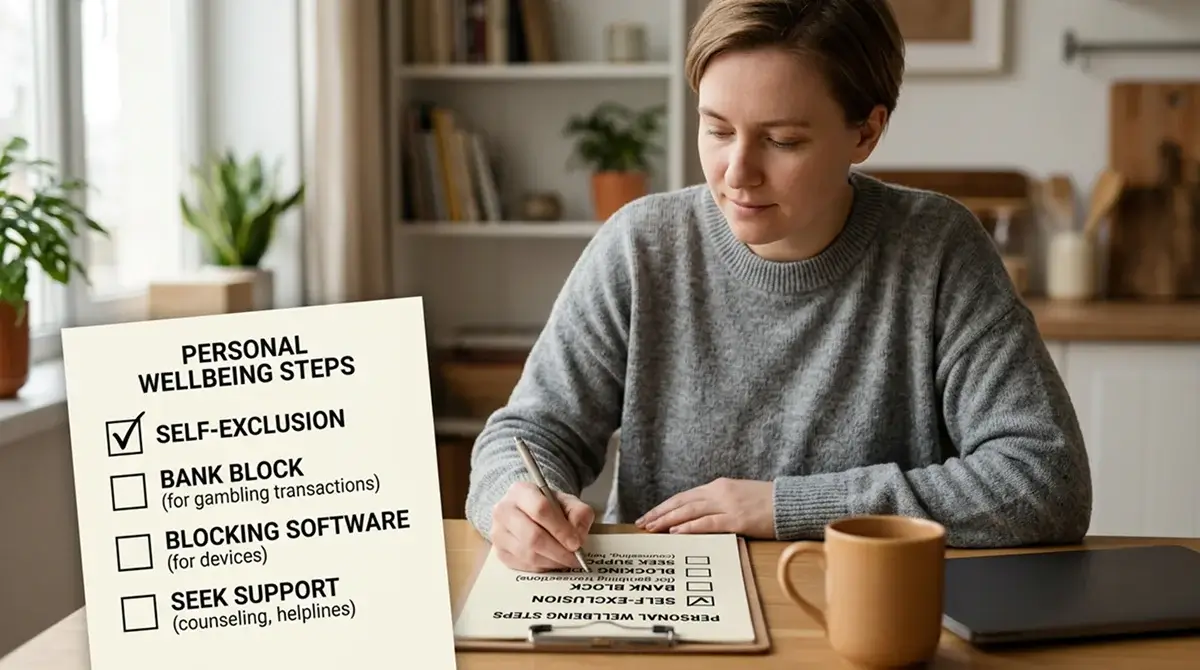
| Personal protection | It asks whether self-exclusion, bank blocks, blocking software or support are needed. | It is not solved by finding a different site. |
The safest way to use this information is not to chase a label. It is to pause, check what can be verified, and avoid turning a protection gap into a gambling route. If self-exclusion is already in place, the practical question is not how to find a site outside it. The practical question is how to keep that protection working and what extra help may be needed.
How to check a gambling site before depositing
A gambling website can display badges, slogans and long claims, but the useful check starts with concrete details. Look for the legal business name, trading name, licence or account number, the exact domain name and the type of activity being offered. Then compare those details with the Gambling Commission public register rather than relying only on the site’s own wording.
Before-You-Deposit Safety Check
A non-GAMSTOP label is not proof of safety. Work through these checks honestly — the tool tells you whether the basics are verified, where a gap remains, and when the safer answer is to step back rather than proceed.
The safer next step here isn’t another account
You’ve ticked a stop signal. When self-exclusion, a bank block, loss-chasing or urgency is part of the picture, the grounded move is support and stronger barriers — not a site outside the protection.
Free, recognised UK support: GamCare · GambleAware · GAMSTOP. Check the current page for the right contact route rather than relying on copied numbers.
How to read this: the top section reflects checks you can actually verify before depositing. Ticking all six means the basics are in place — it is not a promise that a site is safe, fair or suitable. The stop signals override everything: if even one is true, the safer answer is to pause and reach for support, regardless of how many checks pass. This tool gives no site recommendations and stores nothing you enter. 18+ · Please gamble responsibly.
The official register can be searched by business name, trading name, domain name or account number. That matters because a brand name on a home page may not be the same as the licensed entity. A domain may also be different from a similarly named domain. If a site gives partial information, changes names between pages, hides the business behind vague wording or makes the licence hard to check, that uncertainty is itself a reason to stop and investigate before sending money or documents.
A practical decision path
- Find the exact business details. Do not rely on a logo or a short brand phrase. Look for the company name, trading name, domain and licence reference shown by the site.
- Check the official register. Use the Gambling Commission register to compare the site’s details against the public entry.
- Compare the activity. A licence entry should match what the site is offering, not just contain a similar name.
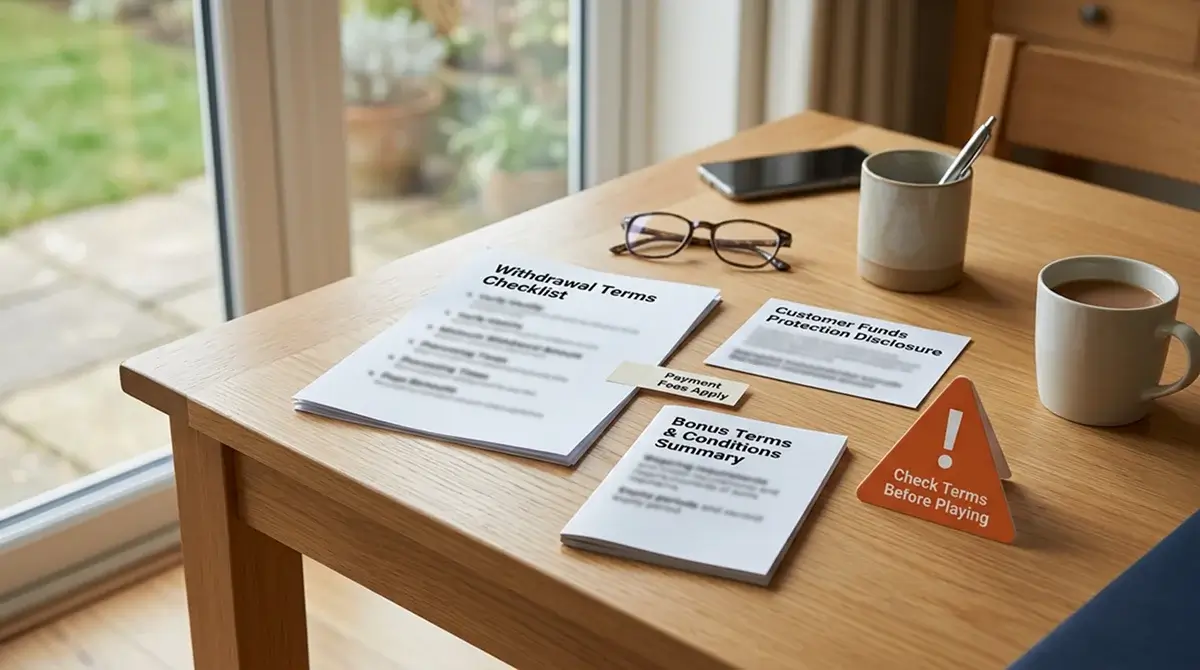
- Read the account terms before a deposit. Withdrawal rules, customer-fund information, bonus restrictions and fees should be available and clear.
- Pause if the answer is unclear. A rushed deposit is not safer because a site uses confident language.

Some readers search this topic because they want a quick answer: “Can I use this site?” A responsible answer cannot be based on a slogan. It has to start with the official register, then continue into payments, identity checks, withdrawal terms and personal risk. A site that cannot be checked properly should not be treated as harmless just because it accepts a registration form.
Where to go deeper
The detailed licence-check guide explains the register route without naming or ranking gambling sites: how to check a gambling site before you deposit.
Marketing claims that deserve a slower read
Non-GAMSTOP pages often attract attention because they sound convenient: fewer limits, flexible payments, fast withdrawals, bigger offers or less identity friction. Official material on illegal-market factors connects interest in such sites with offers, alternative payments and attempts to avoid limits, ID checks or self-exclusion protections. That does not mean every page using a phrase behaves the same way, but it does mean the reader should not turn those claims into automatic benefits.
The key is to ask what evidence sits behind each claim. “Trusted” should lead to licence and complaints checks. “No ID” should raise questions because online gambling businesses must ask for proof of age and identity before gambling. “Instant payout” should lead to the written withdrawal rules, fees, verification conditions and account restrictions. “Alternative payment” should lead to questions about credit-card restrictions, e-wallet funding, bank blocks and what happens when a payment or withdrawal dispute arises.
Risk map for common claims
| Claim | Why it needs care | Safer question to ask |
|---|---|---|
| “Legal for UK players” | Broad wording can blur Great Britain licensing, site location and consumer protection. | Which business, domain and activity can be checked on the official register? |
| “No ID” or “no verification” | Age and identity proof is part of licensed online gambling before gambling begins. | What checks are actually done, and when are documents requested? |
| “Instant withdrawals” | Withdrawal terms, fees, identity information and restrictions may still apply. | Are withdrawal rules clear before a deposit, and are limits or fees disclosed? |
| “Huge bonus” | Unclear bonus terms and withdrawal obstacles have been flagged as fairness concerns. | Can you understand the restrictions without guessing? |
| “No limits” | Limits and blocks can be protective, not just inconvenient. | Would removing a limit increase financial or emotional risk? |
| “Accepts excluded players” | That directly conflicts with the purpose of self-exclusion. | What support or blocking layer is needed instead of gambling? |
A strong claim is not the same as a verified fact. Treat claims as prompts for checking, not as reasons to deposit. Also avoid comparing sites by who appears to remove the most friction. Less friction can mean less protection, especially for someone who has used self-exclusion, bank blocks or account limits to keep gambling away.
Plain rule
If the selling point is that a site helps people avoid a protection, slow down. A protection may feel frustrating in the moment, but it exists because gambling can become harmful when access, spending and emotion move faster than judgement.
Payments, identity checks, withdrawals and account terms
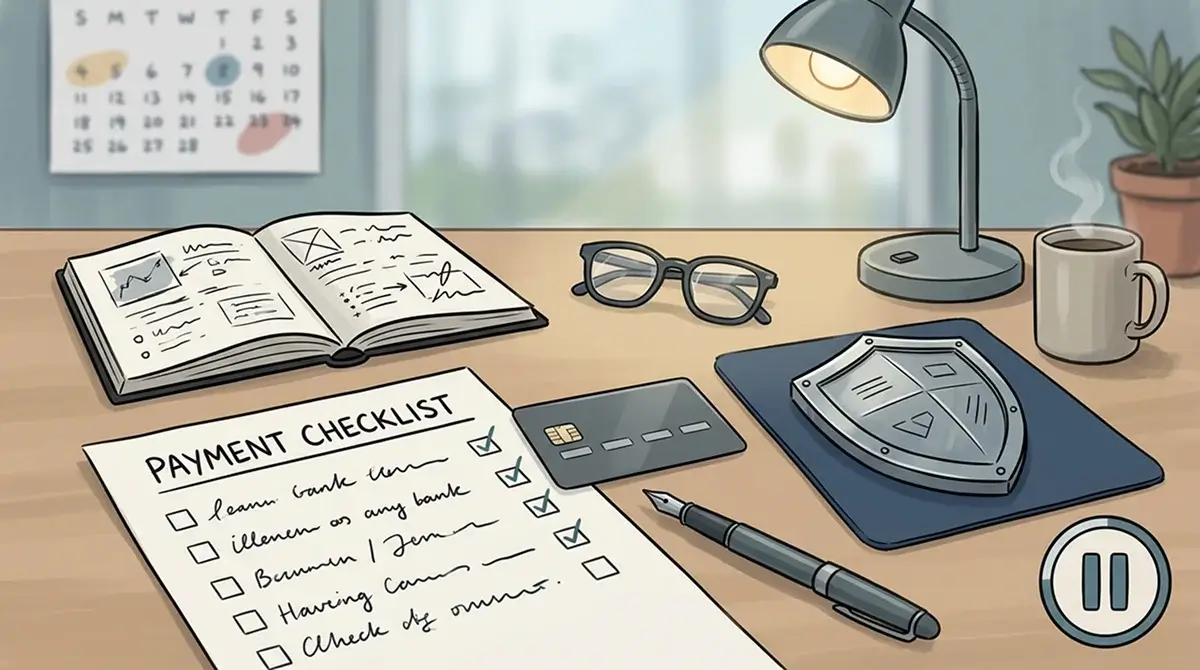
Payment convenience is a common reason people look at non-GAMSTOP claims. It is also one of the easiest areas to misunderstand. In Great Britain, credit-card gambling payment restrictions apply. E-wallets and alternative payment routes can add further questions about the original source of funds, charge handling, withdrawal routes, account ownership and bank gambling blocks. A payment option should not be treated as safer just because it is available.
Bank gambling blocks are protective tools that can help some people add distance from gambling payments. The limits of a block may depend on payment coding, the route used and the bank’s settings. A site or payment method that appears to get around a block should not be treated as clever or harmless. It may be a sign that the user needs a stronger protection layer, a conversation with the bank, or support away from gambling.

Identity checks also need calm framing. A late or unclear request can be frustrating, but the safer answer is not to avoid checks altogether. The safer answer is to know what the site says before depositing, keep copies of account terms, avoid sending sensitive documents to unverified sites, and use official complaint routes if a verified business handles a dispute poorly.
Before any deposit, check these points
- The business name, trading name, domain and licence status can be compared with the official register.
- The site explains how age and identity checks work before gambling begins.
- Deposit and withdrawal methods are written clearly, including any fees or limits.
- Bonus terms can be understood without guessing or hunting through hidden pages.
- Customer-fund information is present and does not imply a protection that is not actually stated.
- There is a complaint route, and you know what evidence you would keep if something goes wrong.
- Self-exclusion, bank blocks or personal limits are respected rather than treated as obstacles.
For focused reading, use the separate guides on payments, bank blocks and credit-card rules, age and ID checks, and withdrawals, terms and customer-fund disclosures.
Self-exclusion is not a problem to solve with a different site
If you are already registered with GAMSTOP, the safest framing is simple: do not look for ways to work around the exclusion. GAMSTOP registration periods include 6 months, 1 year, 5 years and 5 years with auto-renewal, and an exclusion cannot be removed early during the minimum period. That can feel strict, but strictness is part of the protective purpose.
Self-exclusion works best when personal details are kept current and when other layers support the same goal. Those layers can include bank gambling blocks, blocking software, venue self-exclusion and help from recognised support services. None of these should be described as a guaranteed treatment or a complete prevention tool. They are practical barriers that may give a person more time, fewer triggers and a clearer path to support.

If gambling feels hard to control
Use current official or recognised support pages rather than gambling pages. Useful starting points can include the Gambling Commission safer-gambling information, GAMSTOP, GambleAware, GamCare, NHS information, Citizens Advice and MoneyHelper. Check the current page for the right contact route and regional detail instead of relying on copied numbers or old opening hours.
Support is not only for a crisis. It can help when gambling is becoming difficult to stop, when someone is borrowing or chasing losses, when a partner or family member is worried, or when debt pressure is making decisions feel urgent. Gambling can affect relationships, finances, physical health and mental health. That does not mean every reader has the same problem, but it does mean the topic deserves care and not a sales-style push toward another account.
Do
- Keep self-exclusion details current.
- Add bank blocks or blocking tools where they help.
- Speak to support services if gambling feels difficult to control.
- Step away from any site that sells access around a protection.
Do not
- Use a different payment route to defeat a protective block.
- Register with altered personal details.
- Assume an offshore claim means fewer real-world consequences.
- Send sensitive documents to a site you cannot verify.
Complaints, disputes and evidence
If a gambling account, withdrawal or bonus dispute has already happened, move from panic to documentation. Save the terms you saw at the time, account messages, deposit and withdrawal records, identity-check requests, screenshots of relevant pages and any complaint reference. Keep the wording factual. A good complaint is easier to follow when it explains dates, account details, the rule being relied on and the outcome requested.
The usual route is to complain to the gambling business first. The business has eight weeks from receipt to resolve the complaint. After the business process or the eight-week point, alternative dispute resolution may be available, and it is described as free and independent, but it has scope limits. That means it is not a guaranteed refund route, a medical service or a substitute for legal advice. It is a process for certain kinds of gambling disputes, and the exact route depends on the business and the issue.
A calm complaint sequence
Suppose a withdrawal is delayed after a bonus was used. The practical sequence is to locate the bonus terms that applied, note the withdrawal request date, save any identity-check messages, ask the business for a written reason, and keep the reply. If the answer is unclear or the issue remains unresolved, the next step is to follow the business’s complaint process and check whether an approved dispute route applies after the relevant point. The sequence does not promise a result; it keeps the evidence clear.
Unfair withdrawal obstacles, unclear bonus terms, low withdrawal limits and arbitrary verification deadlines have been recognised as concerns in official and government-backed material. Still, a claim about a specific site should be based on current evidence, not assumptions. The detailed guide on account and withdrawal disputes separates practical record-keeping from unsupported refund promises.
Privacy, cookies and account security still matter
Checking a gambling site is not only about the licence line. Gambling accounts can involve names, dates of birth, addresses, payment details, identity documents, device information and account history. Before sharing personal data, read whether the privacy information is clear, whether cookie choices are explained, and whether there is a route for personal-information complaints. Do not assume a site is secure because it says it is secure.
General account hygiene helps as well. Use strong separate passwords, keep software and apps updated, use two-step verification where available and consider a password manager. These basics do not prove a gambling site is trustworthy, but they reduce avoidable account risk. They are especially important when a site asks for sensitive documents or handles payment information.
The separate guide on privacy, cookies and account-security checks keeps this topic focused. It does not accuse named sites or promise that any site is secure. It gives a practical way to read privacy and security claims before sending data.
Use the right guide for the right problem
The safest structure for this topic is to keep each question separate. Meaning, licence checks, self-exclusion, payments, identity, terms, complaints, support and privacy are connected, but they do not answer the same problem. Use the page below that matches the decision in front of you.
Questions people often need answered
Does “not on GAMSTOP” mean a casino is safe for UK players?
No. The phrase does not prove that a site is safe, licensed for Great Britain, fair, or suitable for someone who has self-excluded. It should start a careful check, not end one.
What is the first practical check?
Compare the site’s stated business name, trading name and domain with the Gambling Commission public register before depositing money. If the details do not match clearly, do not treat the site’s claim as verified.
Should a self-excluded person look for a site outside GAMSTOP?
No. A self-exclusion block is a protective measure. The safer response is to keep details current, add other protective tools and use support if gambling feels hard to control.
Are no-ID or instant-withdrawal claims reliable?
Treat them carefully. Licensed online gambling requires age and identity checks, and withdrawal or bonus claims need clear written terms before any deposit. Convenience wording should not replace evidence.
Where can someone get help without using a gambling site?
Use current official and recognised support pages such as the Gambling Commission safer-gambling information, GAMSTOP, GambleAware, GamCare, NHS information, Citizens Advice or MoneyHelper, depending on the problem.
Final check before you act
Before using any gambling site promoted as outside GAMSTOP, ask one grounded question: would I still be comfortable if every protection, fee, identity check, withdrawal term, complaint route and data use had to be checked in writing first? If the answer is no, pause. If self-exclusion, bank blocks, debt pressure or loss chasing are part of the situation, the safer next step is support and stronger barriers, not another account.

The practical aim of this guide is not to tell you where to gamble. It is to help you slow the decision down, separate verified checks from sales language, and recognise when the right answer is to step away. That approach protects money, personal data and wellbeing more reliably than any claim on a gambling landing page.
Created by the "Casino not on Gamstop" editorial team.