Main overview · Payment risks · Age and ID checks · Complaints and disputes
UK Casino Bonus Terms and Fast Withdrawal Conditions
 Available in US
Table of Contents
- Understanding UK Casino Payment Rules and Customer Fund Protection
- Withdrawal limits and fees need plain wording
- Comparison: clear enough or pause and verify?
- Customer-fund protection is not the same as a bank guarantee
- Bonus terms can turn a simple withdrawal into a dispute
- What to save before and after a withdrawal request
Understanding UK Casino Payment Rules and Customer Fund Protection
Terms can feel like background text, but in gambling they decide practical questions: whether a promotion changes withdrawal rights, whether a fee applies, how an account can be restricted, what information may be requested, and what complaint route is available. A reader should not need to decode vague wording to understand the basic route from deposit to play to withdrawal.
The first warning sign is a page that makes depositing easy but makes withdrawal rules hard to find. The second is a promotion that is advertised in large simple words while the restrictions are scattered across separate pages. The third is a site that talks about fast payments but says little about verification, closed accounts, bonus conditions, dormant balances, customer-fund protection or dispute handling. Those gaps do not prove that a specific outcome will happen, but they are good reasons to pause.
A practical way to read terms is to ask one question at a time. Can you identify the business? Can you see the domain or trading name that applies? Can you understand when a withdrawal can be refused, delayed or reduced? Can you see whether any fees are charged? Can you see what happens to customer funds if the business fails? If the answer is no, the issue is not small print; it is a missing explanation about your money.
Withdrawal limits and fees need plain wording
Gambling Commission guidance says operators must not place a maximum withdrawal limit on a consumer deposit balance. It also expects withdrawal fees to be clear and to reflect costs. For a reader, that means vague statements about “management discretion”, unexplained caps or surprise charges should not be treated as normal just because they sit inside a long terms page.
This does not mean every delay is unlawful, or that every fee question has the same answer. A business may have checks to complete, and different account circumstances can matter. The safer interpretation is narrower: the reader should be able to find written rules that are clear enough to understand, and any later explanation should fit what was shown before money was deposited.
Withdrawal language deserves special care where a site promotes itself as easy, flexible or outside usual restrictions. A person may be attracted by convenience, then discover that the inconvenient part appears only when money is being withdrawn. If the terms are not readable before deposit, the reader has no reliable basis for trusting a short payout claim.
Comparison: clear enough or pause and verify?
| Area | Clear enough to understand before deposit | Pause and verify |
|---|---|---|
| Withdrawal rules | The terms explain minimum and maximum transaction amounts, timing expectations, checks that may apply and reasons a request can be held. | The site says “instant” or “guaranteed” but gives no realistic conditions, or the withdrawal page appears only after account registration. |
| Fees | Any withdrawal, inactivity or account fees are easy to find and described in direct language. | Fees are described as discretionary, hidden in scattered pages, or explained only after the user tries to withdraw. |
| Bonus restrictions | Wagering rules, excluded games, maximum bet rules, expiry dates and withdrawal effects are visible before the offer is accepted. | The promotion looks simple, but key restrictions appear in separate terms, pop-ups or account messages that are hard to preserve. |
| Verification | The site explains when age, identity or account checks may be needed and how documents are handled. | The site sells “no ID” convenience but later reserves broad rights to demand documents or withhold payment without clear triggers. |
| Customer funds | The account information explains how customer money is held and what protection level applies. | The site uses comforting words such as “secure funds” without saying whether funds are segregated or what would happen if the business failed. |
| Complaints | The complaint route is easy to find, with contact details and a process that can be followed in writing. | The only route is a chat box, a vague support address, or a promise that someone will “look into it” without a record. |
Customer-fund protection is not the same as a bank guarantee
Remote operators that hold customer funds are expected to hold them separately from the business’s own funds and tell customers what level of protection applies. That disclosure matters because “held separately” and “protected if the business fails” are not the same thing. A reader should not assume that deposits are protected like money in a bank account, and should not treat a broad safety claim as proof.
The useful question is: what does the account information actually say? Some wording may describe no protection, some may describe medium protection, and some may describe higher protection. The exact category and explanation matter more than a comforting phrase on a homepage. If a site does not explain customer funds clearly, that is a reason to avoid depositing until the gap is answered in writing.
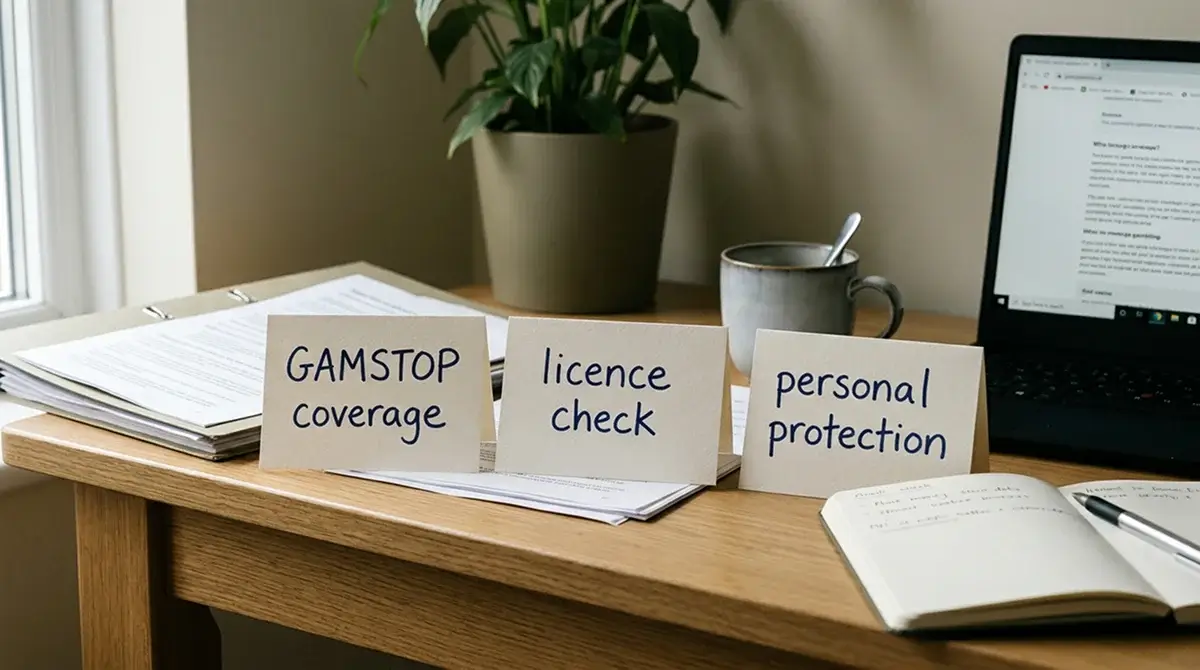
This point is especially important for anyone considering a site because it is outside GAMSTOP. A protection gap can sit alongside other risks: unclear licensing, difficult complaints, unusual payment routes and less predictable identity checks. Fund wording should be read with those issues together, not as a separate reassurance.
Bonus terms can turn a simple withdrawal into a dispute
Bonus offers are a common source of confusion because they can change how a balance may be used or withdrawn. Restrictions may include wagering requirements, maximum bet rules, time limits, excluded games or limits on winnings from bonus play. A fair-looking offer can still be unsuitable if the reader does not understand what happens before they deposit.
Official and government material has highlighted concerns around unclear bonus terms, withdrawal obstacles and arbitrary verification deadlines. That does not justify making accusations about a named business without evidence. It does justify a careful habit: save the terms that applied when the offer was accepted, save the promotion page, and avoid relying on a support message that cannot be copied or recorded.
A reader should also separate two balances: money they deposited and promotional funds or winnings affected by promotional conditions. If the terms blur that distinction, or if support gives inconsistent answers, the issue should be recorded before further play. Continuing to play while trying to clarify a disputed condition can make the facts harder to untangle.
What to save before and after a withdrawal request
- Save the business name, trading name, domain, account number or username, and the page showing the licence claim if one is made.
- Save the terms page, promotion terms and withdrawal page as they appeared before the deposit or before the offer was accepted.
- Keep deposit confirmations, withdrawal requests, balance screenshots and messages from support.
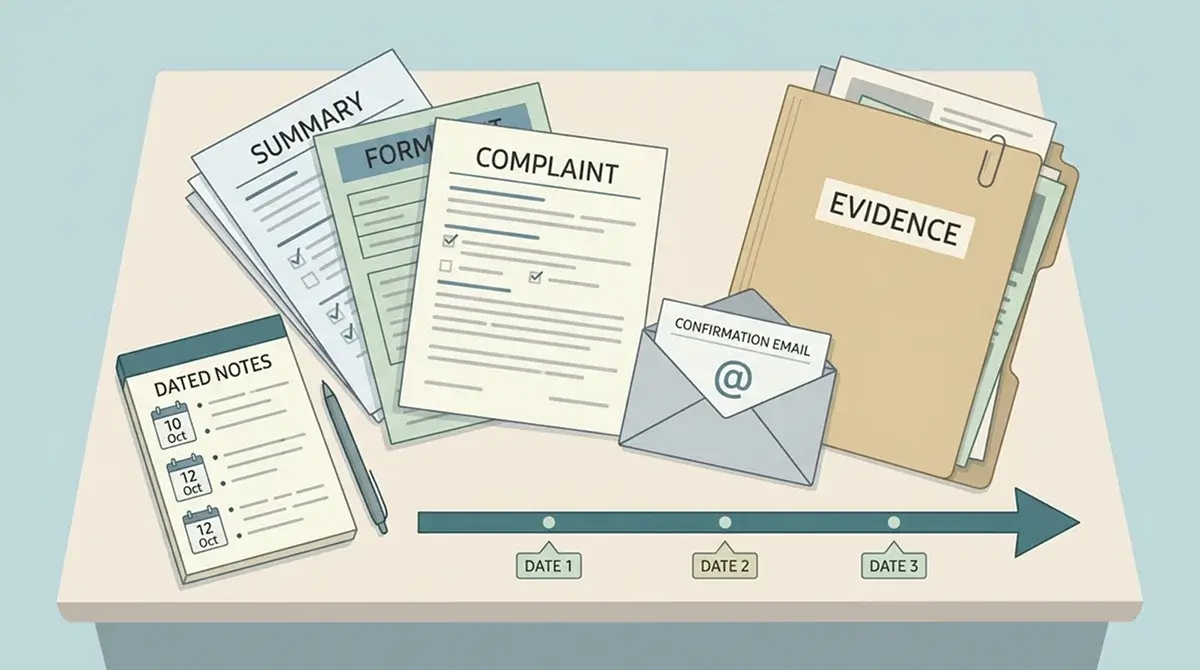
- Record dates and times in a simple timeline, especially when rules appear to change after a withdrawal is requested.
- Do not send extra identity or payment documents through an unclear channel simply because a message applies pressure. First check the licence position, privacy information and written reason for the request.
If money is already disputed, the next step is no longer a general terms check. Move to a written complaint process, keep evidence and avoid promises from anyone claiming that a payout or refund is guaranteed. A complaint may be valid, but the outcome depends on the facts, the business, the licence position and the process available.
Created by the "Casino not on Gamstop" editorial team.