Main overview · Withdrawals and terms · Check a licence · Support options
UK Casino Complaints and Fast Withdrawal Dispute Resolution
 Available in US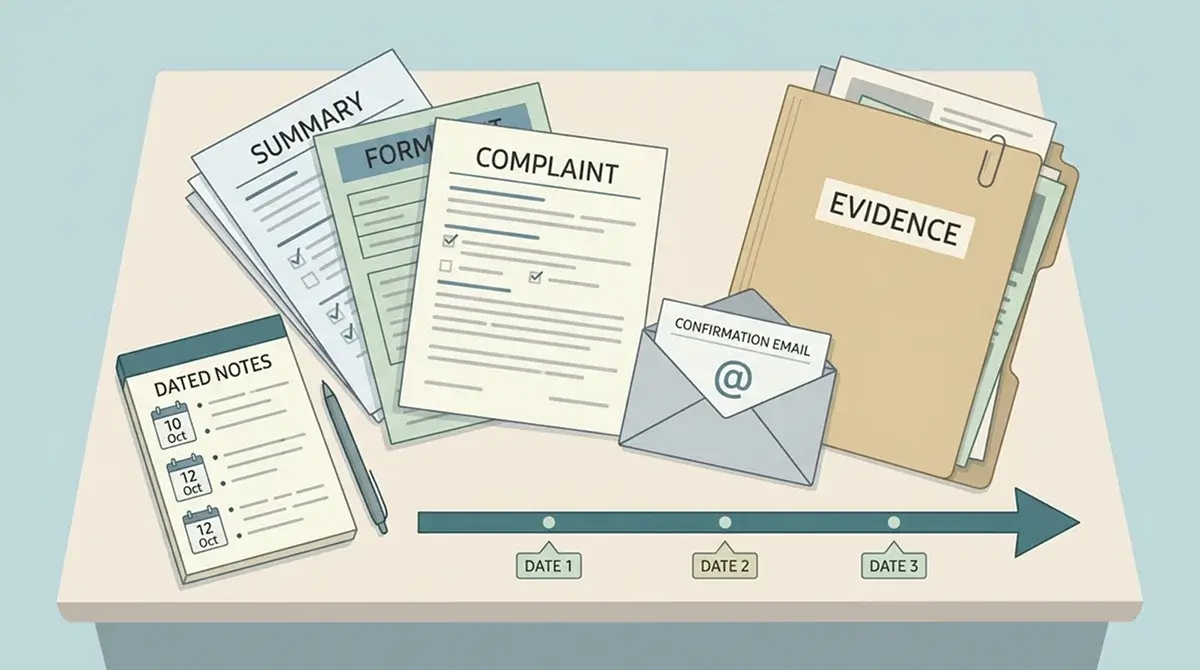
Clear Steps for Documenting UK Casino Payment Disputes
A dispute can look like one large problem, but it usually contains several smaller questions. Is the business refusing a withdrawal? Is it asking for documents? Is it applying a bonus term? Is the issue about a payment that never arrived? Is the account blocked for security reasons? Is the business licensed for the market it claims to serve? Each question needs evidence, and mixing them together can make the complaint harder to answer.
Begin with a short written summary: what happened, when it happened, how much money is affected, what the account shows, what the business said, and what result is being requested. Keep the summary factual. Avoid accusing the business of fraud, theft or illegality unless there is evidence and a proper basis for that wording. Strong language without facts can distract from the actual issue.
If the site is not clearly licensed in Great Britain, the route may be more limited. That is why the licence check matters early. A public-register match does not guarantee a successful dispute, but it may show which business and domain are covered and which complaint information is available. A missing or mismatched licence should be recorded as part of the evidence, not turned into a legal conclusion.
The complaint path
| Step | What to do | What to avoid |
|---|---|---|
| 1. Build a timeline | List deposit, offer acceptance, play, withdrawal request, document request, support replies and account changes in date order. | Do not rely on memory when screenshots, emails or account records are available. |
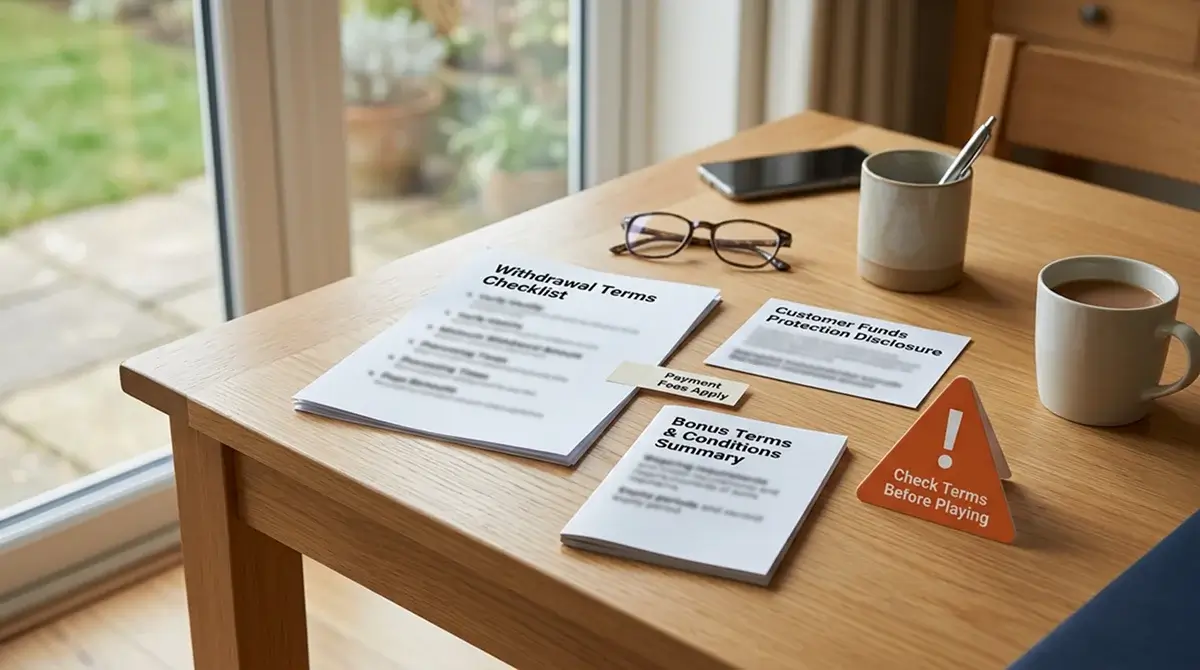
| 2. Gather the rules | Save the terms, bonus terms, withdrawal rules and account messages that applied at the relevant time. | Do not assume today’s terms are identical to the terms that applied earlier. |
| 3. Check the business | Use the official register where a Great Britain licence is claimed, and compare business name, trading name and domain. | Do not treat a badge, footer line or copied licence number as enough on its own. |
| 4. Complain to the business | Send a clear written complaint through the stated route and ask for a written response. | Do not keep repeating the same complaint through live chat if it produces no record. |
| 5. Mark the 8-week point | Official guidance says the business has 8 weeks from receipt of the complaint to resolve it. | Do not lose track of when the formal complaint was received. |
| 6. Consider ADR if available | After the business process or 8 weeks, an alternative dispute resolution provider may be available and is free and independent. | Do not assume ADR covers every issue or guarantees the result you want. |
| 7. Separate support needs | If the dispute is tied to debt, anxiety, chasing losses or repeated deposits, use support routes as well as the complaint route. | Do not wait for a money dispute to finish before seeking help with harm or debt pressure. |
What evidence is worth keeping?
Good evidence is boring but useful. It includes account screenshots, deposit receipts, withdrawal confirmations, emails, chat transcripts, identity-check requests, bonus terms, account-closure messages and any page showing the business name or licence claim. Save the material in a way that preserves dates where possible. If a chat tool does not provide a transcript, write down the date, time, name shown by support and the key points while the conversation is fresh.
Evidence should include the reader’s own actions as well as the business’s actions. If a bonus was accepted, note when it was accepted. If further play happened after a disputed term appeared, note that too. A complete record is better than a selective one, because the business or ADR provider may ask how the dispute developed.
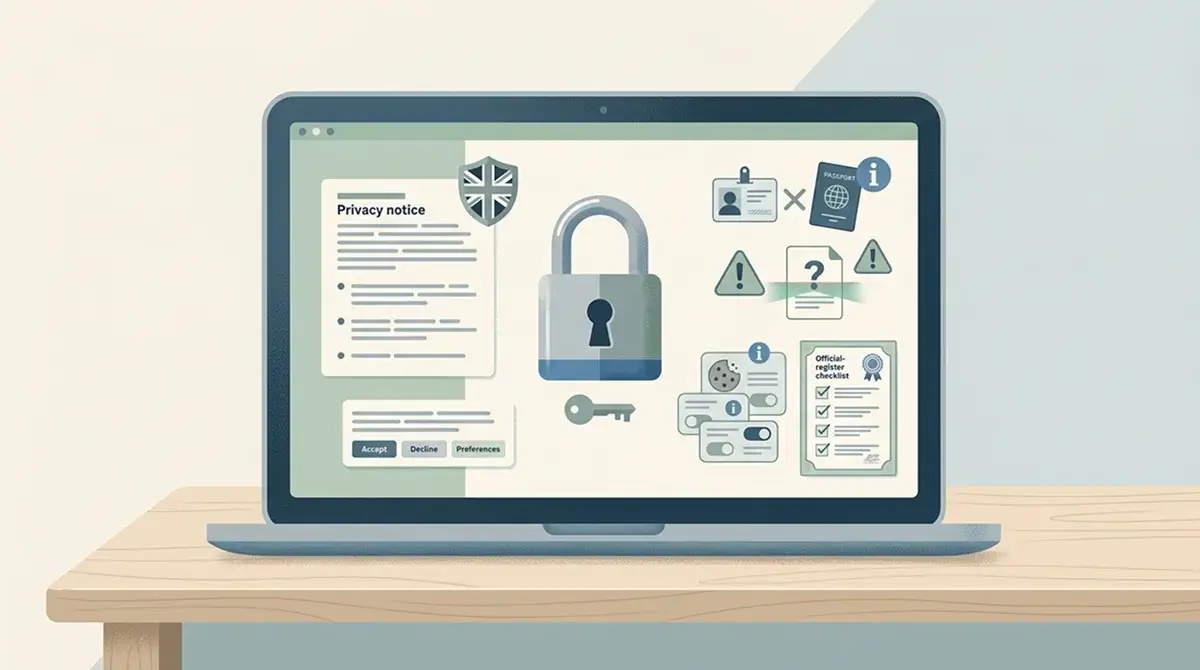
Do not send original identity documents repeatedly to different addresses simply to speed up a complaint. If a document request appears, check that the route is official for that account, that the privacy information is understandable, and that the request is connected to a clear reason. If the request feels unsafe or inconsistent, record the concern and ask for written clarification.
Complain to the business first
Gambling Commission public guidance tells users to complain to the gambling business first and to keep evidence. This is not just a procedural box to tick. The business needs a chance to investigate the account, explain the term it relied on, confirm whether verification is outstanding, or correct an error. A clear complaint also creates a starting point for the 8-week period.
A useful complaint is short enough to read and specific enough to answer. It should say: “I am complaining about this withdrawal”, “this is the amount”, “this is the date”, “this is the term or message I was shown”, and “this is what I am asking you to do or explain”. Attach evidence in a logical order. Ask for a final written response if the issue cannot be resolved.
It is fine to be firm. It is not helpful to promise legal action, demand a guaranteed refund, or copy a template that makes claims the reader cannot prove. If the issue later goes to ADR or another route, the complaint should show that the reader acted clearly and reasonably.
What ADR can and cannot do
Alternative dispute resolution can be available after the business process has ended or after 8 weeks. It is described as free and independent, but it is not unlimited. ADR may deal with certain disputes between a customer and a gambling business, yet it may not be able to decide every regulatory, legal, data-protection or harm-related issue. Scope matters.
Before using ADR, check which provider the business names, what the provider accepts, what evidence is required and whether the business is actually within the provider’s scope. If a site is not licensed in Great Britain or does not identify a proper route, ADR may not be available in the same way. That gap is important information for the reader, but it should not be turned into a guarantee that another route will recover money.
Reporting a concern to a regulator is also different from resolving an individual money dispute. A report may help highlight conduct concerns, but it should not be treated as a personal recovery service. Keep the goals separate: complain to resolve the account issue, use ADR where available for a dispute, report concerns where appropriate, and seek support if gambling is causing harm.
If the dispute is linked to harm or debt
A withdrawal dispute can become emotionally intense. Someone may keep depositing to win back money, borrow to cover a gap, hide the issue from family, or continue gambling while waiting for a reply. In that situation, the complaint is not the only problem. Support can run alongside the complaint, and using support does not weaken the fact that a business still needs to answer a clear account issue.
If spending feels hard to control, use the dedicated support page on this site and official help resources rather than looking for a new gambling route. If bank blocks, self-exclusion or other barriers are already in place, treat them as protective signals. A complaint about money should not become a reason to take a larger risk with another site.
Created by the "Casino not on Gamstop" editorial team.