
Main overview · GAMSTOP and self-exclusion · Payment risks · Complaints and disputes
UK Gambling Support Options and Casino Self-Exclusion Help
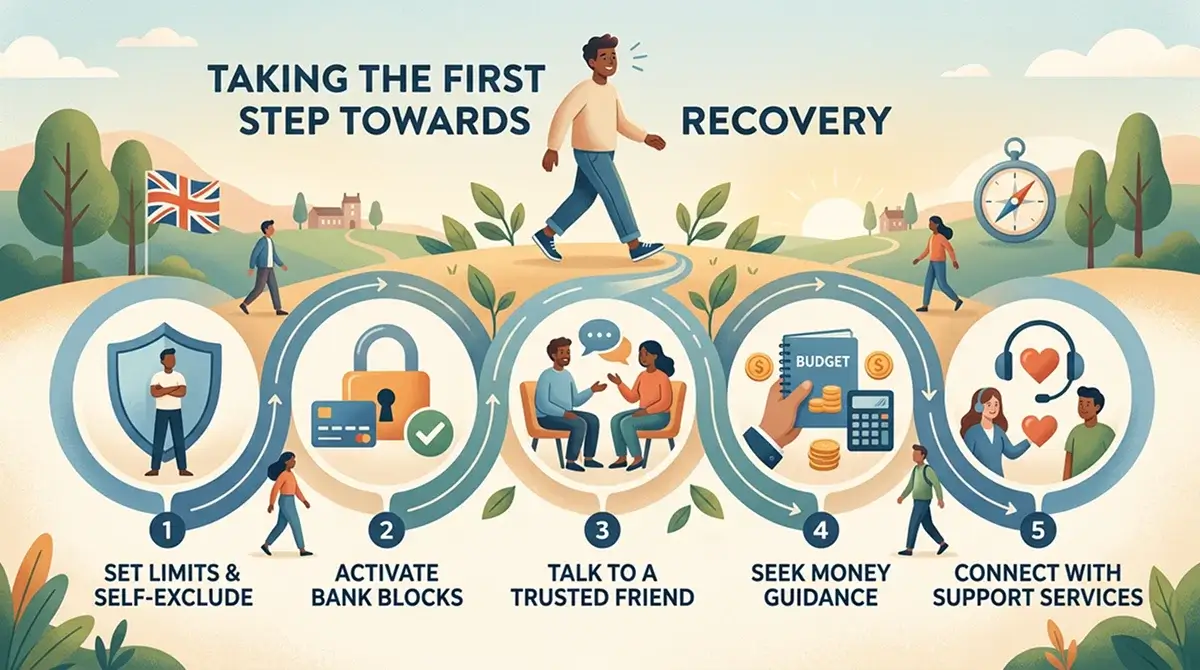
Choosing the Right UK Casino Support and Blocking Tools
There is no single support route for every gambling problem. A self-excluded person who feels tempted needs a different first step from someone who is arguing with a gambling business about a withdrawal. A person worried about debt may need money guidance as well as gambling support. Someone worried about a partner, friend or adult child may need advice on how to talk without taking control of another person’s accounts.
The most useful approach is to match the support to the situation. GAMSTOP deals with online self-exclusion for participating gambling companies. Bank gambling blocks and blocking software can add practical friction. GamCare, GambleAware and NHS information can help with gambling-harm support and understanding the problem. Citizens Advice and MoneyHelper can help readers think about money and debt pressure. None of these routes requires a reader to prove that things are “bad enough” before taking a safer step.
Do not treat support names, phone numbers or opening hours copied from a random page as permanent. Use official pages for current contact details. That is especially important when the reader is under stress and may act quickly on outdated information.
Decision path: what fits your situation?
| Situation | Useful first move | Extra layer to consider |
|---|---|---|
| You are self-excluded and tempted to gamble | Pause before searching for another site and use GAMSTOP support information or a recognised gambling-support service. | Add bank gambling blocks, blocking software and a conversation with someone trusted. |
| You keep chasing losses | Stop treating the next deposit as a solution and talk to a gambling-support service such as GamCare or GambleAware. | Use practical barriers: deposit limits where relevant, bank blocks, self-exclusion and blocking tools. |
| Debt or bills are affected | Use money guidance from recognised services such as Citizens Advice or MoneyHelper alongside gambling support. | Separate urgent household costs from gambling spending and avoid borrowing to continue play. |
| A withdrawal dispute is making you want to gamble more | Follow a written complaint route and keep evidence, rather than trying to win the money back elsewhere. | Use support if anxiety, anger or loss-chasing is driving new deposits. |
| You are worried about someone else | Use recognised support pages for advice on conversations, boundaries and signs of harm. | Do not secretly take over accounts or make threats; get guidance on safe next steps. |
| You are unsure whether gambling is a problem | Read NHS and recognised support information about common effects on money, relationships and health. | Try a cooling-off step: no new deposits while you review spending, blockers and support options. |
Self-exclusion and blocking tools work best in layers
GAMSTOP is an important online self-exclusion service, but a single tool should not be treated as a complete shield against every route into gambling. Support organisations describe a layered approach: self-exclusion, bank gambling blocks, blocking software, limits where relevant, and help from people or services. A layer can fail or have a gap; several layers make it less likely that a stressful moment becomes an immediate deposit.
Bank gambling blocks are not a challenge to beat. If a payment is stopped, that is a signal to slow down, not to search for a different payment route. Blocking software is similar. It may not be perfect, but it can create a pause between an urge and an action. That pause can be enough to contact support, leave the device, talk to someone, or deal with the money issue separately.
For someone already self-excluded, the safest wording is simple: do not look for ways around the exclusion. If the urge to do that is strong, the urge itself is a useful reason to use support. A person does not have to wait until a relapse has happened before asking for help.
Money pressure needs its own support
Gambling harm often becomes visible through money: unpaid bills, borrowing, credit pressure, arguments about accounts, or the feeling that one win would repair everything. Gambling support can help with behaviour and urges, but debt or money worries may need a separate advice route. Citizens Advice and MoneyHelper provide information for people dealing with gambling-related money pressure, and those routes should be used from the official pages rather than from copied contact details.
A practical first step is to separate the gambling problem from the household-money problem. Write down essential bills, debts, deposits made, pending withdrawals and any borrowing connected to gambling. That list may feel uncomfortable, but it reduces guesswork. It also helps if the reader speaks to a support service, a debt adviser or a trusted person.
Avoid solving debt pressure with another deposit. That is not a moral judgement; it is a risk pattern. When the reason for gambling is “I need to get back what I lost”, the next decision is being made under pressure. Support and money guidance can help create distance from that pressure.
When a complaint and support need to happen together
A person can have a genuine account dispute and still need gambling support. Those two facts can exist at the same time. If a business has applied a term unfairly, the reader can keep evidence and complain. If the dispute is also causing panic, debt or repeated deposits, the reader can use help services at the same time. Waiting for a complaint result before seeking support can leave the person exposed during the most stressful part of the dispute.
Use the complaints page for the account issue: timeline, evidence, formal complaint, 8-week point and ADR where available. Use support routes for urges, spending, secrecy, debt pressure or worry about another person. Keeping those routes separate makes each one clearer.
Useful questions before the next deposit
- Am I looking for a site because a self-exclusion, bank block or limit is stopping me?
- Am I trying to recover losses, pay a bill, or fix a debt with one more bet?
- Have I hidden gambling activity, borrowed money, or felt unable to stop after deciding to stop?
- Would I still make this deposit if I had to explain it to someone I trust?
- Can I wait long enough to use a support page, a bank block or a helpline before acting?
If any of these questions feels uncomfortable, that discomfort is enough reason to pause. Support does not require a diagnosis, and this page does not diagnose anyone. It simply points to safer routes when gambling decisions are being made under pressure.