UK Casino Sites and Credit Cards: What the Rules Say
 Available in US
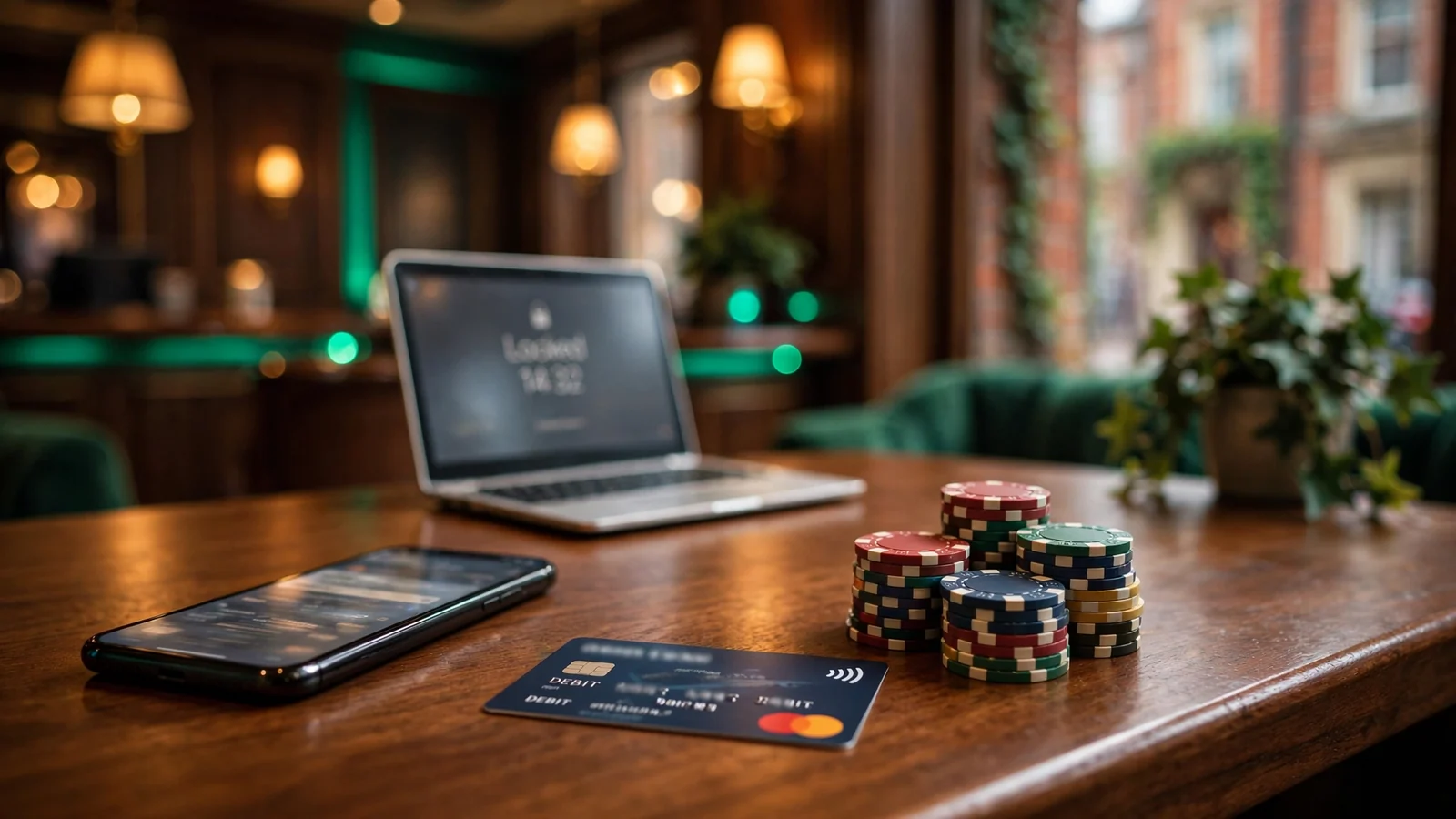
The credit-card restriction applies to gambling deposits, while other payment methods may offer different ways to deposit and withdraw.

Table of Contents
- Why UK-Licensed Casinos Don’t Take Credit Cards
- Best casino sites in the UK
- Which Payment Methods Can You Use Instead?
- Depositing and Withdrawing Without a Credit Card
- Can You Use a Credit Card to Gamble Online in the UK?
- How to Keep Deposits and Payouts on a Clear Payment Route
- When the Credit-Card Gambling Ban Took Effect
- Deposit Minimums and Payment Limits
- What UK Casinos Require Before You Deposit
- What Paying by Card or Another Method May Cost
- Can You Play Online Slots with a Credit Card?
Why UK-Licensed Casinos Don’t Take Credit Cards
If you are looking for a UK-licensed casino that accepts credit-card deposits, the central point is simple: remote gambling licensees cannot take credit-card payments for gambling. The restriction applies to casinos serving the British market, not just to particular games or card brands. A casino cannot make a credit card an accepted gambling deposit method by describing it as an exception or offering a special cashier route.
The rule took effect on 14 April 2020 and remains in force. It is part of the framework governing licensed online gambling in Great Britain. A remote gambling licensee must follow it wherever the company itself is based; being operated from another country does not remove the requirement to hold the relevant UK Gambling Commission licence when serving British customers.
That is why lists described as UK casinos that accept credit cards need careful reading. A page may mention Visa or Mastercard, but those names alone do not tell you whether it means credit cards, debit cards, or both. Some specialist casino reviews list Visa and Mastercard as payment methods; check the casino’s own cashier for current UK availability and whether your particular card product is eligible. The card’s function matters more than the logo.
In practical terms, a credit card should not be available as a way to fund gambling at a UK-licensed casino. If the cashier displays card options, that does not establish that credit-card deposits are permitted. A debit card is a different payment product, even when it carries the same Visa or Mastercard branding. Treating every card as interchangeable is an easy way to misread a payment page.
The restriction concerns credit-card payments for gambling, rather than only a direct card transaction labelled “casino deposit”. It also prevents remote operators from accepting credit-card funding routed through a money service business. So adding an intermediary does not turn a prohibited credit-card gambling payment into an acceptable one. The relevant question is whether the funds are being supplied by credit for gambling, not how many steps appear between the card and the account.
Casinos That Accept Wirecard in the UK: What to Check
There is also a limit on wallet payments: an operator cannot accept a wallet payment where that wallet allows credit-card funds to be used for gambling. A wallet name in a cashier is therefore not, by itself, proof that every way of funding that wallet can be used for a casino deposit. Payment arrangements must still comply with the restriction.
This explains why a search for credit-card casino sites in the UK can produce confusing results. Some pages use “card” as shorthand, list card brands without distinguishing credit from debit, or describe payment options without confirming their current eligibility for UK customers. Others may be out of date. None of those descriptions changes what a UK-licensed casino is allowed to accept.
The phrase “credit card casino not on GamStop” does not make the UK credit-card rule disappear. Whether a site is associated with a self-exclusion scheme and whether it is permitted to accept credit-card payments are separate questions. A site’s wording or location should not be mistaken for confirmation that it holds a UK operating licence or may take credit-card funds for gambling.
Upaycard at UK Casinos: How to Check Availability
If you see a claim that a site offers credit-card deposits to UK players, check what the claim actually means before relying on it. Is it referring to a debit card? Does it concern customers in another country? Is the casino licensed to serve the UK? A payment logo or a broad “cards accepted” statement cannot answer those questions on its own. For a UK-licensed casino, credit-card funding for gambling is not an available route.
The restriction is not a judgement about whether one card is more convenient than another. It is a rule that licensed operators must follow. That is why a list promising the best credit-card casino sites in the UK cannot provide a legitimate shortlist of UK-licensed casinos that accept credit-card gambling deposits. The wording may attract attention; the payment rule still applies.
For you, the useful distinction is between a card brand and a card product. Visa and Mastercard can appear on debit cards as well as credit cards, and a cashier’s payment information may not settle which one is eligible. Read the payment terms and the cashier together, and do not assume a credit card will work because another kind of card with the same brand is listed. The ban remains in place.
Credit card availability Not permitted for gambling at UK-licensed casinos
Primary alternative Debit cards (Visa and Mastercard)
Key restriction date 14 April 2020
Best casino sites in the UK
- NightWinBonus: £900 + 400 free spins · Payout speed: 1-3 business days
- BeOnBetBonus: 100% up to €500 + 100 FS · Payout speed: 1-3 business days
- ChanzeBonus: Slots Welcome Bonus #1 200% up to €500 · Payout speed: 1-3 business days
- EvoSpinBonus: 125% up to €2500 + 125 Free Spins · Payout speed: 1-3 business days
- AmunbetBonus: Join now and get 450% up to 2,700 GBP + 450 FS · Payout speed: 1-3 business days
- WinBeastBonus: €5000 + 500 FS + €650 Freebet · Payout speed: 1-3 business days
- BritsinoBonus: Welcome Package – Get your £2,200 + 2,000 FS · Payout speed: 1-3 business days
- SlotoSportBonus: 500% up to £ 10 200+ 777 FS · Payout speed: 1-3 business days
- SpinFormulaBonus: 550% Up To £15,000 + 550 FS · Payout speed: 1-3 business days
- DieselwinBonus: Welcome Pack 250% up to £4000 + 200 FS · Payout speed: 1-3 business days
Which Payment Methods Can You Use Instead?
For UK-licensed casinos, debit cards are the most straightforward alternative to a credit card. Visa and Mastercard debit cards are commonly accepted, so you may be able to use a card you already have rather than opening a separate payment account. The practical advantage is familiarity; the limitation is that acceptance can still depend on the casino and the particular card product. Check the cashier’s current options before choosing.
| Method | Practical strength | Point to check |
|---|---|---|
| Debit card | Broad acceptance, including Visa and Mastercard | Whether your card is eligible and available for both deposits and withdrawals |
| PayPal | Speed and convenience | Whether the casino allows it and whether its bonus terms exclude it |
| Open banking or bank transfer | Can support fast deposits and withdrawals at many sites | Whether the specific casino offers the service and how its process works |
| Skrill or Neteller | Available at some casinos | Promotion eligibility and withdrawal support |
| Paysafecard | Prepaid way to fund an account | Deposit-only; it is not a payout route |
PayPal is often chosen for a quick, familiar payment flow. A specialist review has reported that some casinos exclude PayPal deposits from bonus eligibility, so do not assume that a promotion applies just because the payment method appears in the cashier. The casino’s own promotion terms are the deciding point. If a bonus matters to you, compare the permitted deposit methods before opting in.
Open banking and bank transfers can be useful when you want a bank-based route rather than a card or e-wallet. A specialist review has reported that these options can provide instant deposits and fast withdrawals at many sites. That is not a promise for every casino: availability and timing depend on the operator’s chosen service. Check that the method is offered for both directions, rather than treating a deposit option as proof that withdrawals are supported.
Skrill and Neteller appear at some UK casino sites, but a specialist review has reported that these e-wallets are often excluded from promotions. That can make them a better fit if your priority is using an e-wallet, and a weaker fit if you are comparing offers. Read the promotion terms for the exact method named; eligibility can differ between casinos and between promotions.
Paysafecard is a different proposition. It is a prepaid voucher for deposits, not a method for receiving withdrawals. That distinction matters if you want one route to handle both sides of your account. A deposit-only option may suit someone who wants to control what is added, but it cannot serve as the payout destination.
Apple Pay is accepted for deposits at some UKGC-licensed casinos. Its availability is operator-specific, so look for it in the live cashier rather than assuming that a casino accepting debit cards also accepts Apple Pay. The same comparison applies to other named options: a payment logo on a general information page does not confirm that it is currently available to your account.
Debit Card
Visa and Mastercard debit cards are commonly accepted alternatives.
E-Wallets
Options like PayPal, Skrill, or Neteller, though bonus eligibility may vary.
Bank Transfers
Open banking or direct bank transfers for a direct account route.
When comparing methods, separate the criteria instead of searching for one universal winner. Debit cards lead on broad acceptance; PayPal’s appeal is convenience; bank-based options may suit you when you want a direct account route; and prepaid vouchers are limited to deposits. Bonus eligibility can change the result again. If the offer matters, check its payment exclusions first. If withdrawals matter, confirm that the same method supports payouts before depositing.
A wallet must not be used as a way to route credit-card funds into gambling. Choose a permitted funding source and compare only the options the UK-licensed casino makes available. The best alternative depends on what you value: acceptance, promotion access, or a route that can handle both deposits and withdrawals. No single method wins every column.
Depositing and Withdrawing Without a Credit Card
Treat a deposit and a withdrawal as two stages of one transaction, not as mirror images. A payment option shown in a casino’s cashier may be available for deposits, withdrawals, or both. Before you send money, check what the cashier says about each direction and whether the withdrawal route depends on how you funded the account. A successful deposit alone does not establish that the same option will be available when you cash out.
For a UK-licensed casino, a credit card is not an available gambling deposit method. If you choose a debit card instead, check that the card type is accepted and that the account details match the payment method. UK casinos commonly accept Visa and Mastercard debit cards, but the live cashier is the practical check: availability can vary by operator and by card product. Do not assume a logo on a general payments page confirms that your specific card will work.
Casino Sites That Accept Jeton in the UK
Before confirming a deposit, review the transaction details in the cashier. Confirm the selected method, the amount and the account currency. A specialist review of casino payment pages reports GBP as a supported currency, but you should confirm that your own account is set to GBP before the first transaction. If the account is held in another currency, conversion may affect what is credited or later returned.
Keep the confirmation details until the transaction appears in your casino balance. If a deposit is delayed or rejected, check the status with the casino and the payment provider rather than submitting the same payment repeatedly. That gives you a clear record of what was attempted and helps avoid confusion between a pending transaction and a completed one.
Why the withdrawal can take longer
A payment that reaches your balance quickly does not mean a payout will be just as quick. A specialist casino payment review describes debit-card deposits as potentially instant while a payout can take several business days. These are different processes: the deposit is authorised into the account, whereas a withdrawal may first wait for the casino to review and approve it.
The casino’s internal processing time is part of the overall wait. After approval, the payment provider or bank still has to deliver the funds. A specialist payment review also notes that a first withdrawal can take longer when the casino is completing verification. So the time shown for a payment method may not include every stage of the payout.
Check the cashier’s withdrawal instructions before relying on a particular route. Look for whether the method accepts withdrawals, what details must be supplied and whether the casino requires a different route if the deposit method cannot receive payouts. If the cashier gives a processing estimate, distinguish the casino’s review period from the time required for funds to reach your account.
Do
- Use your own debit card or verified e-wallet
- Check the live cashier for current availability
- Confirm that the withdrawal route supports your method
Don’t
- Attempt to use a credit card for gambling deposits
- Assume a card brand means a specific product is accepted
- Use a wallet that relies on credit-card funding
A practical transaction check
Before depositing, confirm that the payment option is available for your account, that it can support the withdrawal you expect to make, and that your currency is correct. Once you request a payout, note whether it is pending casino approval or has already been sent. If it remains under review, contact the operator through its account support channels and ask what action, if any, is needed.
The main point is simple: choose by the complete route, not by the speed of the first step. A quick deposit can still lead to a slower payout. That distinction matters.
Can You Use a Credit Card to Gamble Online in the UK?
No. A UK-licensed online casino cannot accept a credit-card payment for gambling. That applies whether you are trying to fund a casino account directly or looking for another route that would still use credit-card money to place bets. Changing the payment path does not make the underlying funds acceptable.
The restriction applies to remote gambling licensees serving customers in Great Britain. A site’s location does not remove the requirement: operators selling into the British market must hold the relevant UK Gambling Commission licence and follow its rules. For you, the practical test is not simply whether a cashier displays a card logo. It is whether the payment would use credit-card funds for gambling.
Direct card payments and indirect routes
If you enter credit-card details in a casino cashier, the operator cannot accept that deposit for gambling. A payment may be refused by the casino or payment provider, but a successful-looking transaction should not be treated as permission to gamble with credit. The rule concerns the funding, not just the label shown beside a payment option.
Casinos That Accept Citadel in the UK: What to Check
An intermediary does not provide a workaround. Credit-card funding routed through a money service business is also restricted when the money is being used for gambling. You cannot make the payment acceptable simply by putting a transfer or another service between the card issuer and the casino.
Wallet payments have a related restriction. A UK-licensed casino cannot accept a wallet payment where that wallet allows credit-card funds to be used for gambling. So, before using a wallet, the relevant point is whether its credit-card balance or funding route can be used for this purpose—not merely whether the wallet itself appears in the cashier.
This distinction matters because payment services can support several ways to add money. A wallet may be usable in some circumstances, while a particular credit-funded route is not. If the funding source is unclear, do not assume that moving money into a wallet first changes its status. Check the wallet’s terms and the casino’s payment conditions, and use a route that does not rely on credit-card funds.
What if the card is accepted elsewhere?
A card that works for ordinary online purchases is not automatically permitted for a gambling deposit. The gambling restriction is specific to credit-card payments for gambling; it is not a general statement that every card transaction must fail everywhere. A casino’s payment screen may also distinguish between card products, so the displayed card brand alone does not tell you whether a particular product can be used.
Attention If a site invites you to use credit-card funds for gambling, treat it as a warning rather than an exception.
Debit cards are a different category from credit cards, but that does not make every card deposit interchangeable. Check the cashier’s current options and the terms for your own card. Do not describe a credit card as a debit card, or route its funds through another service, to get around the restriction.
The same principle applies if your intended game is a slot, table game or another casino product. The payment rule follows the gambling transaction; selecting a different game does not turn a credit-card deposit into an allowed one. The game and the source of the money are separate questions.
If a site invites you to use credit-card funds for gambling, treat that as a warning rather than an exception. Online gambling in the UK is legal only through licensed and regulated sites, and a compliant remote gambling licensee must not accept the prohibited payment. No clever detour.
How to Keep Deposits and Payouts on a Clear Payment Route
A payment route is easier to manage when the casino account and the payment account belong to the same person. Matching your account details to the name on the payment method can reduce avoidable questions about who supplied the funds. It does not remove the casino’s verification checks, but it keeps basic ownership details from complicating them.
A practical way to assess a route is to compare three points:
| Check | What to look for |
|---|---|
| Account ownership | The casino account and payment account are in your name |
| Route consistency | You use the same named account for deposits and withdrawals |
| Payout destination | The casino can return funds through the original payment source |
The simplest arrangement is often one payment account used consistently in both directions. Adding another person’s card or account can make the ownership trail less clear, even if that person has agreed to the transaction. Use payment details that belong to you.
Why casinos may return funds to the original source
Returning money to the source used for a deposit is a common anti-fraud and anti-money-laundering control. UK anti-money laundering rules generally require payouts to go back to the original payment source. This helps keep the movement of funds traceable rather than sending money to an unrelated account.
That is why a casino may not treat every payout destination as interchangeable. If you deposit through one account and request a withdrawal somewhere else, the casino may need to check that the alternative destination belongs to you. Further verification may be needed before the payment can be processed.
An alternative route is not automatically a problem, but it can add a check. The account name, payment details and requested destination should make a coherent trail. If they do not, the casino may need to resolve the discrepancy before releasing funds. A neat route helps. It is not a shortcut around checks.
Keep the ownership trail straightforward
Before making a transaction, check that the personal details on your casino account match those held by your payment provider. Use your own account, rather than a friend’s or relative’s, and avoid switching between accounts without a clear reason. If you need to change a payment route, check the casino’s withdrawal rules first so you understand whether it will accept the new destination and what verification it may request.
Transaction Check
- Confirm the payment option is available for your account
- Verify that the method supports withdrawals
- Check that your account currency is correct
- Ensure your account details match the payment method
KYC checks are part of confirming that the customer and payment route are genuine. If the casino asks for information to verify ownership, provide details that relate to your own account and follow its instructions. A mismatch does not necessarily mean a payment will be refused, but it can create extra work and delay resolution.
For anyone comparing online casinos, the useful distinction is not whether a payment method sounds flexible. It is whether the route keeps ownership clear from deposit through payout. A consistent, personally owned account is easier to explain than a chain of unrelated payment details. That is the cleaner trail.
When the Credit-Card Gambling Ban Took Effect
The UK credit-card gambling ban took effect on 14 April 2020. The Gambling Commission introduced the restriction, and it remains in force: it has not been relaxed since it began. The date is therefore more than a historical detail. It marks when credit-card payments for gambling became prohibited at UK-licensed casinos, and the same rule still applies today.
The restriction is not a temporary measure or a condition that individual casinos can choose to remove. A UK-licensed casino cannot decide to accept credit cards for gambling because a customer requests it, because a card issuer authorises a transaction, or because an older payment page lists cards without distinguishing their type. The rule applies across UK-licensed gambling, rather than being an optional policy set separately by each casino.
That matters when you come across older information. A page published before the ban took effect may describe credit-card deposits as an available feature. A saved cashier screen or outdated payment guide may also fail to reflect the current position. Such material does not show that the restriction has ended. The key date is 14 April 2020, and the rule has remained in place since then.
UK casino sites accepting EcoPayz and Payz
The word “card” can also make old or broad descriptions unclear. The restriction concerns credit-card payments for gambling; it is not a statement that every type of payment card is prohibited. The relevant distinction is the source of credit, not simply whether a payment is made through a card-shaped piece of plastic or a digital wallet. For the historical question, the important point is that the credit-card restriction started on a fixed date and continues to govern UK-licensed casinos.
If you are checking whether an old claim is still current, compare it with the present rule rather than relying on its publication date or the fact that a payment once appeared in a cashier. The ban has not been lifted. A casino serving UK customers under a UK Gambling Commission licence must follow the restriction, even if a third-party page suggests otherwise.
The date also helps separate the rule from changes to a particular casino’s payment menu. A method appearing or disappearing at one operator does not alter the national restriction. Nor does the passage of time turn a prohibited credit-card gambling payment into an acceptable one. The effective date remains 14 April 2020; the status remains unchanged.
So, if you are asking when credit cards were banned for gambling in the UK, the answer is 14 April 2020. If you are asking whether the ban still applies, it does. There has been no relaxation that would allow a UK-licensed casino to accept credit-card payments for gambling. Old listings may linger. The rule has not.
Summary
- UK-licensed casinos are prohibited from accepting credit-card payments for gambling.
- Debit cards are the most common and straightforward alternative.
- The credit-card ban has been in force since 14 April 2020.
- Always verify payment terms and bonus eligibility directly in the casino’s cashier.
Deposit Minimums and Payment Limits
A casino’s minimum deposit is the smallest amount its cashier will accept for a particular payment method. A specialist casino review gives the starting range as £10–£20, with the exact minimum depending on the method selected. Treat that as a guide to the figures you may encounter, not a promise that every cashier will show the same threshold: the operator’s current payment screen sets the amount for your account.
The minimum is not the same as a maximum. A cashier may also impose a ceiling on each deposit, while separate daily or monthly caps can apply. These limits vary by payment method and account status, so one figure cannot safely be carried over from one route to another—or assumed to apply to every customer. A specialist casino review identifies these as variable limits rather than a single market-wide schedule.
| Limit to check | What it controls |
|---|---|
| Minimum deposit | The least you can add in one transaction |
| Per-transaction maximum | The most you can deposit at once |
| Daily maximum | The total permitted across deposits in a day |
| Monthly maximum | The total permitted across deposits in a month |
Check the cashier for the selected method before entering an amount. If a deposit is declined, the amount may be outside that method’s permitted range; the account’s applicable limits may also differ from those shown elsewhere. Do not assume that increasing the amount will solve the problem. Confirm the displayed minimum and maximum, then follow any message from the operator.
For budgeting, the useful figure is not merely the smallest amount accepted. Consider how the transaction cap and any daily or monthly ceiling fit the amount you intend to deposit. Those are operator and account controls, not a reason to deposit more than you planned.
If you arrived looking for a credit-card deposit minimum, that figure does not apply at a UK-licensed casino: credit-card payments for gambling are not accepted. The amounts above relate to permitted payment methods. The payment option shown in the cashier, and the limits attached to it, are the relevant figures to check.
What UK Casinos Require Before You Deposit
Before you fund a gambling account, the operator must establish that you are old enough to use it. UK-licensed casinos must verify your age before allowing a deposit; being able to open an account does not, by itself, mean you are cleared to pay in. If the checks are incomplete, you may need to provide information or documents before depositing is permitted.
There is also a financial-control step. UK Gambling Commission rules require remote gambling licensees to prompt new customers to set a financial limit before their first deposit. You should also be able to find and use account-level limit controls after registration. These controls let you set boundaries for your gambling account; they are not simply payment-method settings.
The order matters: age verification and the first-deposit limit prompt are account safeguards, not optional extras that depend on whether you use a debit card, wallet or another route. Looking for a credit-card casino in the UK does not change those requirements. Check the casino’s terms and account settings before attempting a transaction, so you know what must be completed first and where to manage your limits later.
Verification
Check the casino’s licence number on the UK Gambling Commission’s public register to ensure they are a legitimate, regulated operator.
Confirm that the casino holds a current UK Gambling Commission operating licence by checking its licence number on the Commission’s public register. A familiar-looking payment option or polished website is not a substitute for that check. For customers in Great Britain, remote gambling licensees must hold the relevant UK licence to offer real-money gambling.
If you cannot find the limit controls, or the operator lets you deposit without completing the required age checks, pause rather than treating the missing step as a minor inconvenience. These protections apply at account level. They are separate from the choice of payment route—and worth checking before money is involved.
What Paying by Card or Another Method May Cost
A payment can carry costs at more than one point in its route. A specialist payment-method review identifies possible charges from the casino, the payment provider, your card issuer or bank, currency conversion, and the payment network. The cashier may show no casino fee while another part of the transaction still affects the amount debited or credited.
For a UK-licensed casino, a credit card is not an available way to fund gambling. If you are comparing debit cards or other permitted methods, check the charge for the specific route you plan to use. A fee displayed by the casino is only one part of that comparison.
Currency matters too. If your account balance and payment are not in the same currency, conversion may involve an exchange-rate spread. A specialist payment-method review notes that this spread can cost more than a visible flat fee. The headline charge is not the whole bill.
Before confirming a transaction, compare:
- any fee shown by the casino;
- charges stated by the payment provider or your bank;
- the exchange rate and any conversion margin;
- any network cost that applies to the route.
Use the same payment amount and currency when comparing options. Otherwise, one method may appear cheaper simply because the displayed fee excludes a cost included in another method’s quote. Also confirm the casino account currency before your first transaction: conversion between that currency and your payment currency can change the final cost.
There is no single method that is cheapest for every transaction. A specialist payment-method review advises comparing casino charges, provider fees, currency spread and network costs for the actual amount being paid. Check the total that will leave your account, not just the fee labelled “deposit charge”. A small-looking line item can be a poor guide.
Can You Play Online Slots with a Credit Card?
No. At a UK-licensed casino, you cannot fund online slot play with a credit card. The restriction applies to the gambling payment, not to a particular game: slots are covered just as other casino games are. The regulator introduced the ban on 14 April 2020, and it remains in force.
That means a credit card is not an acceptable deposit route even if the cashier displays other card options. A payment routed through a wallet does not make credit-card funding permissible either. UK-licensed remote gambling operators cannot accept credit-card payments for gambling, including when the card is used through a money service business.
Casinos That Accept eCheck in the UK: Payment Checks
The practical distinction is between credit and debit cards. UK casinos commonly accept debit cards, including Visa and Mastercard, for deposits. A debit card draws on money in your bank account rather than borrowing through a credit facility, so it is not the same as using a credit card for gambling. Check the cashier’s current options before paying: card brands and eligible products can vary by operator.
If a card is declined, do not assume that changing the route through a wallet will solve the issue. The relevant question is whether the funds originate from credit. A wallet that permits credit-card funds to be used for gambling cannot be used to bypass the restriction. Choose a payment route that the casino accepts and that does not rely on credit-card funding.
Slots do not receive an exception to the rule. You can still play them at a UK-licensed casino using an accepted, permitted deposit method, but not by putting the stake on a credit card. The game is available; that funding route is not.
Can I use a credit card at 333 Casino in Great Britain?
No, UK-licensed casinos cannot accept credit-card payments for gambling. A debit card may be accepted, but check that the card and payment option are eligible in the casino’s cashier.
Can I deposit in GBP?
Yes, GBP is supported. Confirm your account currency before your first transaction to avoid conversion costs.
Which method has the lowest fees?
There is no universally cheapest method. Compare the casino’s charges, payment-provider or bank fees, currency-conversion spread and any network costs for your transaction.
Are fast casino withdrawals guaranteed?
No. Payout speed depends on the casino’s approval process and whether your account is fully verified; first withdrawals can take longer while checks are completed.
Is Skrill available?
Yes, Skrill is available at some UK-friendly casino sites and remains a common deposit method. Check whether the casino supports withdrawals through it and whether its deposits qualify for promotions.
Created by the "Casino not on Gamstop" editorial team.