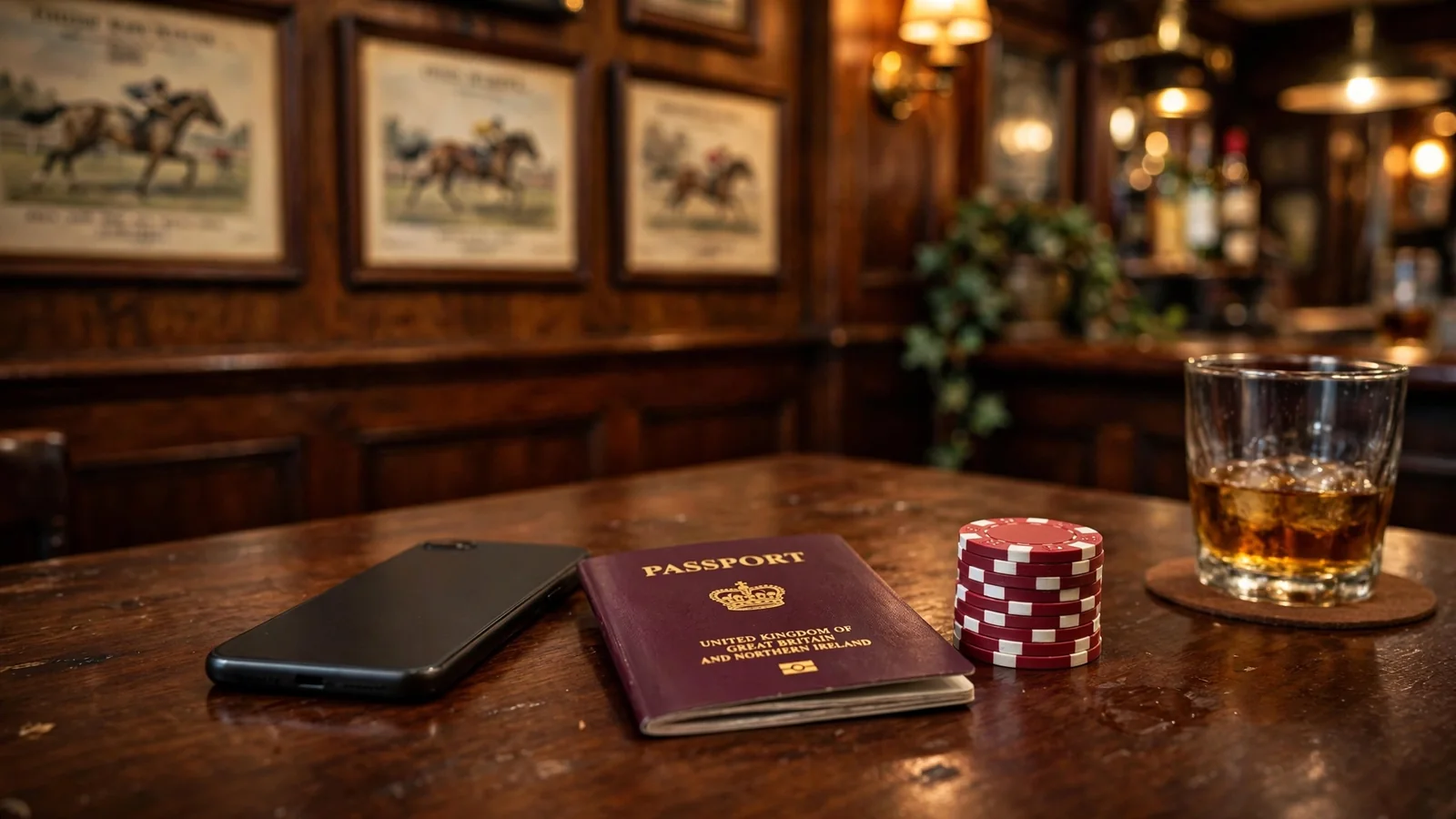
International Casinos for UK Players: Legal and Safety Checks
 Available in US
International branding does not establish UKGC authorisation; licensing, safeguards, bonus conditions and withdrawal rules shape the practical differences.

Table of Contents
- What “International Casino” Means in the UK
- The Legal Position for UK Players
- Best casino sites in the UK
- Access, GamStop and the Safeguards You Give Up
- Bonus Terms: Compare the Wagering, Not Just the Headline
- Live Roulette: What This Page Can—and Cannot—Compare
- Real-Money Play: Check the Cash-Out Rules First
- Reading Casino Reviews Through Conflicts of Interest
- Casino Apps: Security Claims Need Context
- Casino Games: Avoid Assuming the Range Is Verified
- Crypto Deposits and Withdrawals: Speed Versus Volatility
What “International Casino” Means in the UK
“International casino” is a broad description, not a licence category. In the UK market, it generally refers to an online gambling operator based or licensed outside the country, or one that presents itself as serving customers internationally. The label alone does not tell you whether the operator is authorised to offer gambling in Britain.
The distinction that matters is the operator’s licence. A foreign casino, in the context of the UK market, is an online gambling operator that accepts British customers without a licence from the UK Gambling Commission (UKGC). Such an operator may hold a licence from an overseas authority, but that does not make it UKGC-licensed. It remains outside the UKGC regulatory system.
That is why “international” and “UK-licensed” should not be treated as interchangeable descriptions. A site may use international language in its branding while holding a UKGC licence; another may accept British customers while operating under an offshore licence only. The wording on a homepage is not the deciding factor. The relevant question is whether the operator holds the licence required to offer gambling to customers in the British market.
| Description | What it tells you |
|---|---|
| UKGC-licensed casino | The operator holds a Gambling Commission licence to offer gambling in the British market. |
| Offshore casino | The operator is licensed outside the UK and is not regulated by the UKGC. |
| “International casino” | A general label that does not, by itself, establish the operator’s UK regulatory status. |
For a British reader comparing international online casinos, the practical first step is therefore to separate the broad category from the regulatory status. “Online casino international” may sound like a description of reach or choice, but it does not identify which regulator oversees the operator or whether it is authorised to provide services in Britain. An overseas licence and a UKGC licence are different credentials; one does not stand in for the other.
What the UKGC distinction means
The UKGC is the regulator responsible for licensing remote gambling operators serving the British market. Without a Gambling Commission licence, an online gambling site cannot legally offer its services in England, Scotland and Wales. The rule concerns the operator providing gambling services, not the language it uses to describe itself or the country where its website is hosted.
This makes the phrase “international casino online” particularly easy to misread. It may suggest a site with a worldwide customer base, but it does not confirm that the site is permitted to serve British customers. Likewise, “UK casino” in a web address or promotional description is not proof of a UKGC licence. Regulatory status needs to be distinguished from marketing language.
A UKGC-licensed casino operates under the British licensing system. An offshore casino operates under a licence issued outside that system and is not regulated by the UKGC. These are not two names for the same arrangement. If a site accepts British customers but lacks a UKGC licence, it falls into the latter category for the purposes of this distinction, even if it calls itself international, global or British-facing.
Non-UKGC Licensed Casinos: Rules and Risks
A useful way to read the label
Treat “international” as a starting description, not a quality mark. It does not establish that a casino is suitable for you, that it has permission to serve customers in Britain, or that its regulator is the UKGC. Nor does the word itself reveal where the operator is licensed. Those points require separate attention.
The same caution applies when a site is described as an “international online casino” in a review or comparison. The phrase may simply identify an operator outside the domestic licensing system. To understand what it means for a British customer, look for the specific distinction: does the operator hold a UKGC licence, or is it licensed offshore and outside UKGC regulation?
This is the clearest dividing line between a UK-licensed casino and an offshore one. The first holds the licence required to offer gambling in the British market; the second does not become UK-authorised merely because it welcomes customers from different countries or uses an international label. Branding can travel. A licence has a defined scope.
“International” describes an operator’s reach or location, but it is not evidence of British regulatory approval. Always check the specific licence status.
So, when you see “best international casino” used as a category, read “international” as a description of the operator’s reach or location—not as evidence of British regulatory approval. The term may cover different kinds of sites, while the licence status tells you which regulatory system applies. That is the useful distinction to establish before comparing anything else.
The Legal Position for UK Players
The key legal distinction is between the operator and the person placing a bet. A casino based overseas may hold a licence in another jurisdiction, but that licence does not authorise it to offer online gambling to customers in Great Britain. To provide gambling facilities to people in England, Scotland or Wales, a remote operator must hold a licence from the UK Gambling Commission, wherever the business itself is located.
That requirement concerns the operator’s right to serve the British market. It is not a rule that makes every bet placed by a British resident at an overseas casino a criminal offence. UK law does not prohibit an individual from betting with an operator licensed outside the country, and there is no criminal penalty for the player simply for doing so.
| Legal question | Position |
|---|---|
| Can an overseas licence alone authorise an operator to serve Great Britain? | No. The operator needs the relevant UK Gambling Commission licence. |
| Is it unlawful for an unlicensed operator to provide gambling facilities to UK customers? | Yes. |
| Is it unlawful for an individual to place a bet with an overseas operator? | No; the player is not criminally liable merely for placing the bet. |
This distinction can be easy to miss when a site describes itself as an international casino or points to a licence issued abroad. The licence may establish that the operator is authorised in the jurisdiction that issued it. It does not replace the permission required to offer gambling in Great Britain. For the operator’s legal position, the relevant question is whether it has UKGC authorisation to serve the British market—not simply whether it holds some form of overseas licence.
The same principle applies whether the operator is physically located abroad or runs an international online casino site accessible from a British device. Location does not remove the requirement. If the business offers gambling facilities to customers in Great Britain, it must have the appropriate UKGC licence. Calling a site “international” does not create a separate legal category or exemption.
There is also a separate restriction on promotion. An operator without the required UKGC licence cannot lawfully advertise its gambling services in the UK. That rule is about the operator’s conduct: it covers both offering gambling facilities to UK customers and advertising those services here. It does not turn the individual player’s act of placing a bet into an offence.
For a British player comparing international casino sites, the legal assessment therefore has two columns, not one. The operator’s authority to offer services in Great Britain is one matter; the player’s liability for betting with an overseas operator is another. The first depends on UKGC licensing. The second is not criminalised merely because the operator is licensed abroad rather than by the UKGC.
Legal Distinction
An overseas operator may be legal for you to bet with, but they may not be legally authorised to provide services in Great Britain.
This is why “legal for the player” and “legally authorised to serve the player” should not be treated as interchangeable descriptions. A player may not face a criminal penalty for placing a bet, while the operator may still lack the legal permission needed to provide that service in Great Britain. The player’s position does not grant the operator a licence, and an overseas licence does not change the operator’s obligations under British law.
The wording “international casinos UK” can also blur these separate issues. It might describe a casino with customers in several countries, or simply an overseas operator whose site can be reached from Britain. Neither description answers the licensing question. The deciding point is whether the operator is authorised by the UK Gambling Commission to provide gambling facilities to customers in Great Britain.
A practical legal comparison should therefore identify the party and the conduct being assessed. For an operator, ask whether it has UKGC permission to offer gambling to the British market and whether it is advertising those services here. For an individual, the relevant point is that UK law does not make betting with an overseas casino a criminal offence in itself. Those conclusions can coexist without contradiction.
Casino Guides for UK Players: Topics and Options
The distinction is narrow but important: an overseas operator cannot rely on its foreign licence as permission to serve Great Britain, while the player is not criminally liable simply for placing a bet with that operator. Legal responsibility is not symmetrical. No loophole for the operator.
Best casino sites in the UK
- NightWinBonus: £900 + 400 free spins · Payout speed: 1-3 business days
- BeOnBetBonus: 100% up to €500 + 100 FS · Payout speed: 1-3 business days
- ChanzeBonus: Slots Welcome Bonus #1 200% up to €500 · Payout speed: 1-3 business days
- EvoSpinBonus: 125% up to €2500 + 125 Free Spins · Payout speed: 1-3 business days
- AmunbetBonus: Join now and get 450% up to 2,700 GBP + 450 FS · Payout speed: 1-3 business days
- WinBeastBonus: €5000 + 500 FS + €650 Freebet · Payout speed: 1-3 business days
- BritsinoBonus: Welcome Package – Get your £2,200 + 2,000 FS · Payout speed: 1-3 business days
- SlotoSportBonus: 500% up to £ 10 200+ 777 FS · Payout speed: 1-3 business days
- SpinFormulaBonus: 550% Up To £15,000 + 550 FS · Payout speed: 1-3 business days
- DieselwinBonus: Welcome Pack 250% up to £4000 + 200 FS · Payout speed: 1-3 business days
Access, GamStop and the Safeguards You Give Up
A site accepting a British visitor is not necessarily authorised to serve customers in Great Britain. Some offshore casinos are intended to block access from the UK, but that restriction is not applied consistently. Gambling.com has reported that some such sites do not enforce the block, and that visitors may get around it using a basic VPN. That report describes access practices, not permission to operate in the British market. A page loading successfully is not a regulatory check.
This makes “international casino sites accepting UK players” an awkward category to assess: access can depend on the operator’s controls and the visitor’s location settings, while neither tells you that the site is overseen by the UK Gambling Commission. Offshore casinos sit outside the UKGC system. The practical difference is not a label on the homepage; it is the absence of UKGC supervision and enforcement if something goes wrong.
Access Risks
Successful website access or registration does not mean the site is overseen by the UK Gambling Commission or follows UKGC safeguards.
Access is not the same as oversight
When comparing international casinos online, separate three questions: can you reach the site, will it accept your registration, and what regulator can act on your behalf? The first two may have straightforward answers on the screen. The third is the important one. An offshore operator does not become UKGC-regulated because it accepts British customers, displays a licence from another jurisdiction or lets you open an account.
That distinction affects the safeguards available. Offshore sites do not provide UKGC-mandated affordability checks, and the UKGC cannot enforce its rules against an operator outside its licensing system. Do not treat a sign-up check or a responsible-gambling page as a substitute for those protections. A site may describe its own procedures, but that is not UKGC oversight.
A useful comparison is therefore not simply “available” versus “unavailable”. It is:
| What you are checking | What access alone tells you |
|---|---|
| Whether the site opens | Only that the page is reachable at that moment |
| Whether it accepts registration | Only that its sign-up process permits an account |
| Whether UKGC safeguards apply | Nothing; an offshore site is outside UKGC regulation |
| Whether a complaint can be enforced by the UKGC | No UKGC enforcement applies to that operator |
The table is plain. The consequences are not.
The particular problem with GamStop
GamStop applies across UKGC-licensed operators. If you register for self-exclusion through the scheme, you are excluded from every UK-licensed site covered by it. Offshore casinos outside the UKGC’s remit are not part of GamStop, so the exclusion does not automatically prevent you from visiting them or opening an account.
A specialist review has described how quickly a self-excluded player may be able to register with a foreign casino and deposit without the safeguards that accompany UKGC-regulated play. The speed is not the central point. The gap is: your GamStop decision does not travel with you to a site outside the scheme. Registration there can therefore make access to gambling possible during the period when you chose to block it.
If you have self-excluded, treating a non-GamStop casino as a workaround undermines the boundary you set. A site’s willingness to accept you does not mean it has checked whether returning to play is safe for you. And because it is outside UKGC oversight, you cannot rely on the Commission to apply its rules or intervene as it would with a UK-licensed operator. This is a specific risk for someone who self-excluded, not merely another item in a general comparison.
What can happen if a dispute arises
The protections you give up matter most when the operator and customer disagree. Gambling.com has reported cases in which unlicensed sites refused to release winnings, leaving customers without legal recourse. That is a report of cases, not a claim that every offshore operator behaves this way. It does show why an accessible account and a displayed balance are not proof that a customer has the same routes for redress as they would at a UKGC-licensed casino.
For a British player, the key comparison is consequently the regulator and the safeguards attached to its rules, not how polished the site looks or how easily it loads. UKGC oversight includes enforceable requirements for licensed operators; offshore operators are not subject to UKGC enforcement or UKGC-mandated affordability checks. A separate foreign licence does not change that distinction.
Do
- Verify the operator’s UKGC status
- Check for GamStop coverage
- Assess the absence of UKGC safeguards
Don’t
- Use successful access as evidence of approval
- Use a foreign licence as evidence of UKGC protection
- Assume a site is safe just because it is accessible
If you are assessing international casinos for UK players, keep the criteria in order: UKGC status, GamStop coverage, and whether you are comfortable with the absence of UKGC safeguards. Do not use successful access as evidence of approval, or a foreign licence as evidence of UKGC protection. For anyone who has self-excluded, the clearest comparison is simpler still: UK-licensed sites are blocked through GamStop; offshore sites are not.
Bonus Terms: Compare the Wagering, Not Just the Headline
A welcome offer is not a cash amount until its conditions say it can be withdrawn. For a useful comparison, put each offer into the same table: bonus type, qualifying deposit, wagering basis, eligible games, time limit, maximum conversion or withdrawal, and any country or payment restrictions. If a term is absent or unclear, the headline value cannot settle the comparison.
Specialist reviews describe larger welcome packages at foreign casinos as a consequence of operators not being bound by UKGC restrictions on bonus terms, wagering requirements and promotional language. That is a reported explanation, not a reason to assume a larger package is better. Offshore casinos are not regulated by the UK Gambling Commission and do not provide its mandated affordability checks. The size of an offer tells you nothing by itself about how difficult it is to meet its conditions.
Compare the formats by what you must do
A deposit match adds bonus funds in relation to a deposit. The key question is not simply how much the casino advertises, but whether wagering is calculated on the bonus, the deposit, or both. Read the offer’s definition before comparing it with another match.
Non-UK Registered Casinos: How Regulation Differs
A specialist review illustrates the arithmetic with a 100% match bonus of £100 and a 35x wagering requirement: if the requirement applies to the bonus, the required qualifying bets total £3,500 before the bonus funds become withdrawable. A separate illustration uses a £20 bonus at 35x, producing £700 in qualifying bets before cash-out. These examples show how the multiplier acts on the stated bonus amount; they are not a claim that every offer uses that basis. Check the wording attached to the offer.
Free-spin packages give you spins rather than a cash bonus. The terms may determine which game the spins apply to and how winnings from them are treated. The relevant comparison is therefore not the number of spins alone, but the rules attached to any winnings and whether those winnings carry wagering conditions.
A no-deposit bonus does not require an initial deposit to receive the stated bonus, but that does not establish that the resulting funds can be withdrawn without conditions. Check whether wagering applies, whether a deposit is required before withdrawal, and what restrictions apply to winnings. The label “free” describes the entry point, not necessarily the route to cash.
Cashback offers return some value under conditions set by the operator. Compare how the offer defines eligible losses and whether the returned amount is cash or bonus funds with further requirements. Do not treat the word “cashback” as proof that the amount is immediately withdrawable.
These are the formats identified by a specialist review as common among foreign casinos serving UK players: deposit matches, free spins, no-deposit bonuses and cashback. The label on the offer matters less than the conditions beneath it.
Bonus Checklist
- Identify the wagering base (bonus, deposit, or both)
- Calculate the total required turnover
- Confirm which games count as qualifying bets
- Check the expiry conditions
- Verify withdrawal eligibility
A quick test before accepting
For each offer, write down the wagering base and multiply it by the stated requirement. Then check which games count as qualifying bets: if some play is excluded or contributes differently, the headline calculation may not describe the actual route to completion. Confirm the expiry conditions and what happens if you withdraw before satisfying them.
For a no-deposit offer or free spins without a deposit, give particular attention to withdrawal eligibility and any required account steps. For a deposit match, compare the wagering burden with the bonus you receive, not just the advertised match percentage. The better offer depends on your criterion: lower qualifying turnover, clearer terms, or a format that suits the play you intended. “Bigger” is not a criterion.
An international casino bonus can look generous while imposing conditions that make its practical value small. Compare the full rules side by side, and do not deposit merely to unlock an offer whose wagering basis or withdrawal conditions you cannot identify. The small print is the offer.
Live Roulette: What This Page Can—and Cannot—Compare
Live roulette brings the dealer and table to a video stream, while you place bets through the casino interface. For a British player considering an international live casino, that describes the format—not the quality, fairness or availability of any particular table.
A useful comparison needs evidence about the things that affect play: which roulette variants are offered, whether tables have clear rules and limits, how the video performs on your device, and whether the interface makes it easy to review your bets before confirming them. A casino name or a “live” label does not answer those questions. Nor does a broad claim about a large game selection establish what its roulette room contains.
Mobile casino deposits by phone credit in the UK
That distinction matters when you compare an international casino list. One operator may be a better fit if its table information is clear; another may suit you better if the mobile display is easier to use. Without comparable, current details, ranking either as the best international roulette casino would be guesswork dressed as precision.
What to compare before you play
Look for the rules and table limits shown beside each game, and check that they match the stakes you intend to use. Pay attention to how the controls work on your chosen device: a layout that is readable on a larger screen may feel cramped on a phone. A live stream can also make connection quality more noticeable than in a game that does not depend on video.
These are practical criteria, not proof that a table is fair or that a casino provides UK-level oversight. Offshore casinos are not regulated by the UK Gambling Commission. They also do not provide UKGC-mandated affordability checks or fall under UKGC enforcement. A polished live studio does not change that regulatory position.
If you are looking for roulette on mobile, assess the actual experience rather than assuming that a mobile casino offers the same table selection and controls as its desktop version. Check the information presented before staking money, including game rules and any displayed limits. If those details are unclear, that is a reason to pause—not an invitation to infer the answer.
Live Roulette
- Compare visible rules and table limits
- Assess usability on your specific device
- Recognise that offshore sites lack UKGC enforcement and affordability checks
The fairest comparison is therefore limited: compare visible rules, usability and device fit where you can inspect them, and avoid treating promotional language as evidence of a particular table’s features. The winner depends on your priority. Clear terms matter more than a grand label.
Real-Money Play: Check the Cash-Out Rules First
A cash-out comparison is only useful when it separates the operator’s processing time from the payment provider’s transfer time. A payment method can look quick on paper while an operator’s own review or pending period delays the request. Before depositing, read the withdrawal rules for the specific casino and method you intend to use.
A specialist review reports that Skrill and Neteller withdrawals at many foreign casinos are processed within 24 hours, with some completed in under 12 hours. Treat those figures as reported timings, not a promise for your account: the casino’s processing stage and any checks can affect when money arrives.
Bank transfers are a slower comparison point. A specialist review describes them as often taking five to seven business days, with some casinos adding an internal delay before the transfer is sent. Check whether a stated timeframe begins when you submit a request or only after the casino approves it. That distinction matters.
What to check before depositing
- Verification: UKGC-licensed operators must verify a player’s identity before processing a withdrawal. Offshore casinos are not regulated by the UK Gambling Commission, so do not assume the same UKGC rules or enforcement apply. Check what identification the operator asks for and when.
- Limits: A specialist review notes that withdrawal limits differ between operators. Find the limit that applies to your account and payment method before you rely on a particular payout.
- Pending periods: Check whether a withdrawal can remain pending and whether you can cancel it during that time. Read the operator’s terms rather than relying on a general estimate.
- Method-specific timing: Compare the casino’s stated processing time with the payment method’s transfer time. They are separate stages, not one clock.
The practical winner depends on your priority: an e-wallet may be the stronger option for reported speed, while a bank transfer may suit you if its longer stated timeline is acceptable. Neither label settles the question without the operator’s own terms.
Offshore sites also do not provide UKGC-mandated affordability checks. Faster access to a withdrawal route does not replace that protection—or make the operator subject to UKGC oversight.
Check the fine print.
Reading Casino Reviews Through Conflicts of Interest
A star rating is a conclusion, not evidence. When you compare international casino reviews, check whether the page explains how it assessed the operator and whether the reviewer has a commercial connection to the business. A clear disclosure helps you judge the rating in context; it does not make the rating independent.
The Santeda–SIS relationship shows why that distinction matters. Under their contract, SIS received a percentage of revenue from losing bets placed through Santeda’s brands. That arrangement is a direct financial interest in the operator’s gambling business. It does not, by itself, prove that any particular review was biased. It does mean that a reader should be able to see the relationship before relying on an endorsement.
Identifying Conflicts of Interest
Check for commercial disclosures, such as whether the publisher receives revenue or benefits from the operator being reviewed. A clear disclosure helps you judge the rating in context.
Look for disclosures beside the review or comparison, not buried where they are easy to miss. Does the publisher explain whether it receives payment, a share of revenue, or another benefit if you register? Does it distinguish commercial placement from editorial assessment? Does it give reasons for its verdict, using criteria you can check, rather than presenting a score as self-explanatory? If those points are absent, treat the rating as a lead for further scrutiny, not proof of quality.
For an international roulette casino, the same test applies: a polished review cannot establish that a particular table or feature has been independently checked. Judge the review’s transparency separately from the casino’s claims. The better comparison is the one that shows its criteria and financial ties plainly—not necessarily the one with the most confident verdict.
Keep the regulatory context visible too. Offshore casinos are not regulated by the UK Gambling Commission, are not subject to its enforcement, and do not provide its mandated affordability checks. A review rating cannot replace those protections or turn a commercial relationship into independent oversight. Disclosure is useful. It is not a safeguard.
When you read a real-money casino review, separate three things: what the operator claims, what the reviewer says it checked, and how the reviewer may benefit commercially. If the page does not let you make that distinction, its headline score deserves little weight. A neat table can organise evidence; it cannot create independence.
USA Casinos for UK Players: Rules and Risks
Casino Apps: Security Claims Need Context
An international casino app is a way to access an operator, not evidence that the operator is authorised to serve people in Great Britain. The same distinction applies if you use a mobile browser rather than install an app: the interface and the regulatory status are separate questions.
Some specialist casino reviews describe non-GamStop casinos as using advanced encryption to protect personal and financial information. Encryption can help protect data as it is transmitted or stored, but that claim alone does not establish how an operator handles complaints, verifies accounts or treats customers. Look for a clear explanation of the security measure and who is responsible for it, rather than treating a padlock icon or an app’s polished design as proof of broader protection.
The same care applies to licensing statements. Specialist reviews may report that some platforms hold licences from authorities outside the UK, but an overseas licence is not a UK Gambling Commission licence. A casino operating offshore is outside UKGC regulation and enforcement. It does not provide the UKGC-mandated affordability checks that apply to UKGC-licensed operators.
For a practical comparison, separate the questions into two columns: what the app claims about data security, and which regulator oversees the operator. A positive answer in the first column does not settle the second. Nor does an overseas licence make an app equivalent to a UKGC-regulated service.
App Security
Encryption protects data during transmission, but it does not guarantee how an operator handles complaints or verifies identities.
If the operator’s identity, licensing information or security explanation is difficult to find, the app gives you little basis for assessing those claims. Convenience is not the same as oversight.
Casino Games: Avoid Assuming the Range Is Verified
A broad games menu can sound like a useful comparison point, but the label alone tells you little. An international casino’s catalogue is not a standard package: the titles and categories shown depend on the operator. Treat claims about a wide selection as a prompt to inspect the actual lobby, not as proof that a particular game will be available to you.
Use a simple comparison table before registering:
| What to check | Why it matters |
|---|---|
| Categories shown in the lobby | Shows how the operator groups its available games |
| Search and filtering tools | Helps you locate a title without relying on promotional descriptions |
| Rules and paytable access | Lets you understand a game’s mechanics before staking money |
| Availability after sign-in | A public page may not show the same selection as the account lobby |
Do not infer a game’s features, provider, return or volatility from its name or from a casino’s general marketing. Those details need to be checked against the specific game information displayed by the operator. If the details are unclear, the comparison is unclear too.
The word “international” describes the operator’s market position; it does not establish a particular games catalogue. Nor does a large menu, by itself, demonstrate better value. The useful winner depends on your criterion: ease of finding a title, access to clear rules, or the range actually visible in your account.
There is a separate regulatory point. Offshore casinos are not regulated by the UK Gambling Commission, and they do not provide UKGC-mandated affordability checks or UKGC enforcement. A polished lobby is not a substitute for those protections. Menu first, marketing second.
Crypto Deposits and Withdrawals: Speed Versus Volatility
Crypto can change the comparison between an international casino’s withdrawal speed and the value you ultimately receive. A specialist casino review reports that crypto withdrawals at foreign casinos can clear in under an hour, faster than fiat methods. Treat that as a reported possibility, not a promise: the timing described by one review does not establish what another operator will do.
Gibraltar Casino Licence in the UK: Explained
Speed is only one criterion. Cryptocurrency values can fluctuate, so the amount received may be worth more or less when converted than it was when you requested the withdrawal. A transfer that clears quickly does not remove that price movement. If preserving a predictable sterling value matters more to you than transfer speed, volatility may outweigh the time advantage.
Before depositing, check whether the casino accepts crypto and which currencies it supports. Then read how the operator handles withdrawals, including the currency sent and any conversion involved. Do not assume that a deposit and withdrawal use the same route, or that a quoted crypto amount will retain the same value in pounds. The relevant comparison is the value you can use after conversion, not simply how fast the transfer appears.
A practical decision table is short:
| Criterion | What to weigh |
|---|---|
| Transfer speed | A specialist review reports that crypto withdrawals can clear in under an hour. |
| Value stability | Crypto prices can move while funds are held or transferred. |
| Sterling outcome | Conversion can affect the amount you end up with. |
An international crypto casino may suit someone who prioritises a potentially rapid transfer and accepts variable value. It is a poorer fit if you need certainty about the sterling equivalent. Neither criterion makes crypto automatically better: the better choice depends on which trade-off you are willing to accept. Speed is not stability.
Is playing at an international casino legal for UK residents?
Yes, placing a bet with an overseas casino is not a criminal offence for you. However, an operator needs a UK Gambling Commission licence to legally offer gambling services to customers in Great Britain; an overseas licence does not replace it.
What should players check to assess whether an international casino is safe?
Check whether the operator holds a UK Gambling Commission licence, or identify which overseas authority licenses it. An offshore licence does not put the casino under UKGC regulation.
Are winnings from foreign casinos taxable in the UK?
No, gambling winnings are not subject to UK income tax, whether the casino is UKGC-licensed or licensed abroad.
Can I use cryptocurrency at foreign casinos from the UK?
Yes, some foreign casinos offer cryptocurrency payments. Crypto withdrawals can be faster than fiat withdrawals, but the value may fluctuate.
What happens if I have a dispute with a foreign casino?
If the casino is unlicensed in the UK, you may have no legal recourse in a dispute. An overseas licence does not bring the operator under UKGC regulation.
What should I do if a casino refuses to pay my winnings?
If an unlicensed casino refuses to pay, you may have no legal recourse. Check the operator’s licence status before depositing, as an overseas licence does not provide UKGC oversight.
Are gambling winnings subject to income tax in the United Kingdom?
No, gambling winnings are not subject to income tax in the UK, regardless of whether the operator is licensed by the UKGC.
Created by the "Casino not on Gamstop" editorial team.